Zero Waste Kitchen Guide for Beginners: Swapping Single-Use for Sustainable
Introduction
Starting a zero waste kitchen guide journey usually begins with a look inside your trash can. It is a humbling experience. I remember doing a “trash audit” three years ago. I tipped my bin onto a tarp (gross, I know) and analyzed the contents. It wasn’t food scraps; it was packaging. Plastic wrap, Ziploc bags, paper towels, and produce stickers. I realized I was paying money for things I was designed to throw away immediately.
We have been conditioned to believe that “convenience” means “disposable.” But this convenience comes at a massive cost. According to National Geographic, 40% of plastic produced is packaging, used just once and then discarded. But going “Zero Waste” doesn’t mean you have to fit a year’s worth of trash into a mason jar. It means rethinking your relationship with stuff.
In this comprehensive 1200-word deep dive, I will walk you through the easiest, most impactful swaps, explain why “Unpaper Towels” are better than the real thing, and provide a practical zero waste kitchen guide to help you save money and the planet, one jar at a time.
1. The “Use It Up” First Rule
The biggest mistake beginners make is throwing away all their plastic Tupperware to buy aesthetic glass jars. This is not zero waste; this is sending waste to the landfill. The most sustainable item is the one you already own. If you have plastic Ziploc bags, wash and reuse them until they fall apart. If you have plastic containers, use them for dry storage until they crack. Life Cycle Assessment: The environmental cost of manufacturing a new glass jar is high. It only becomes “eco-friendly” if you use it hundreds of times. So, use what you have first.
2. Swapping Plastic Wrap for Beeswax
Plastic cling wrap is the ultimate single-use villain. It is made of PVC or LDPE, difficult to recycle, and leaches chemicals into food. The Swap: Beeswax Wraps. These are pieces of cotton fabric infused with beeswax, jojoba oil, and tree resin.
-
How it works: The warmth of your hands molds the wrap around a bowl or a piece of cheese. As it cools, it creates a seal.
-
Maintenance: Wash with cold water (hot water melts the wax) and mild soap. They last for a year and can be composted at the end of their life.

3. The Paper Towel Addiction: Enter “Unpaper”
We treat paper towels like they are free. We use them to dry clean hands, wipe up water, and act as napkins. The production of paper towels requires massive amounts of water and trees, and they cannot be recycled once soiled. The Swap: Swedish Dishcloths or Huck Towels.
-
Swedish Dishcloths: Made of cellulose and cotton. One cloth absorbs 20x its weight in liquid and replaces 17 rolls of paper towels. You can boil them or throw them in the dishwasher to sanitize.
-
The “Rag Jar”: Keep a jar of old cut-up t-shirts under the sink for the “gross stuff” (like cat vomit or grease) that you don’t want to wash.
4. Dishwashing: Sponges vs. Loofahs
Your yellow-and-green kitchen sponge is made of synthetic plastic foam. Every time you scrub, it sheds microplastics into the drain (as discussed in our Laundry article). Plus, they are breeding grounds for bacteria. The Swap:
-
Natural Loofah: It’s a dried gourd plant! It scrubs well and can be composted.
-
Wooden Pot Brush: Bristles made from agave or coconut fiber. When it wears out, you just replace the head and compost the old one.
-
Solid Dish Soap: Instead of plastic bottles of liquid soap, use a solid block of dish soap. It looks chic and lasts for months.
5. Grocery Shopping: The Bulk Bin Strategy
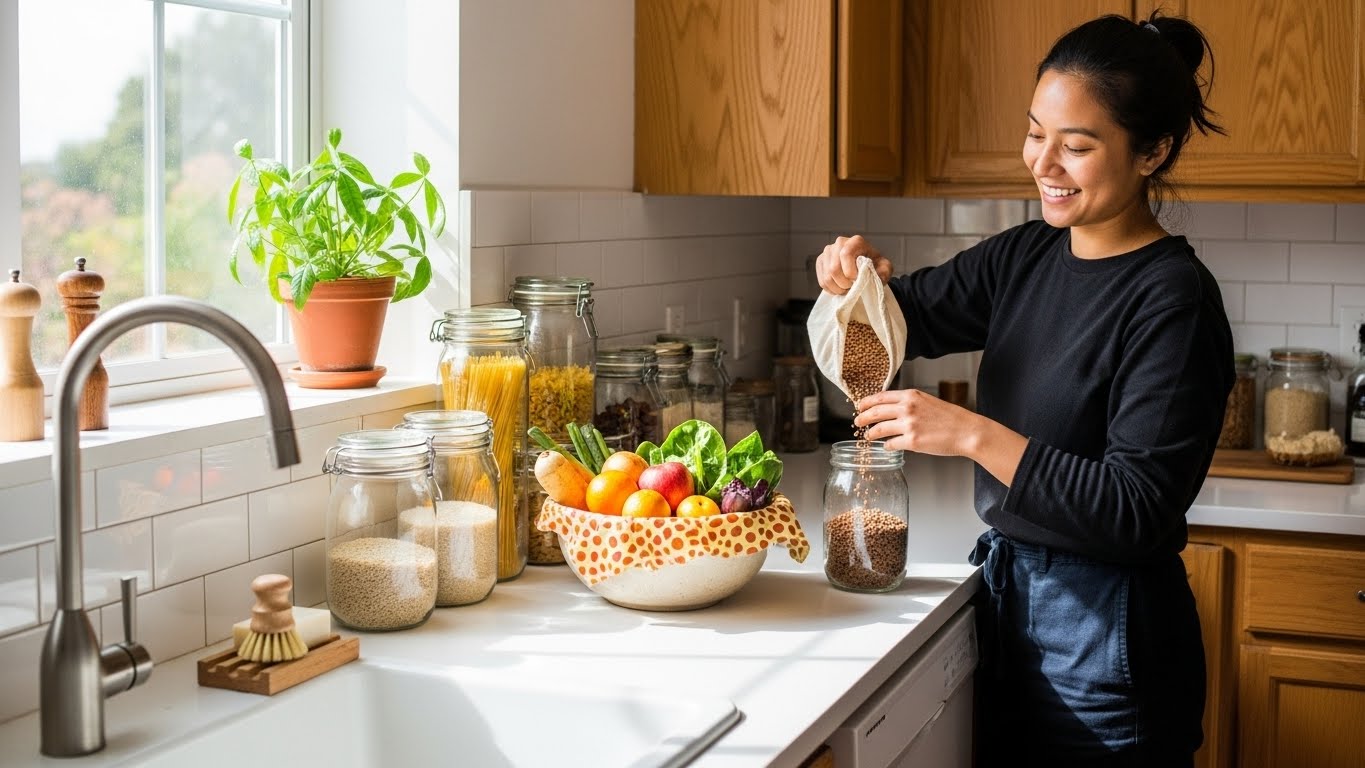
Zero waste starts at the store, not at home. If you buy rice in a plastic bag, you have already created waste. The Bulk Kit:
-
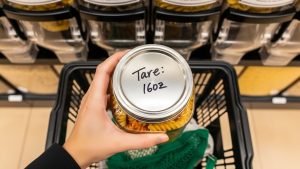
Glass Jars: Weigh them at home and write the “Tare Weight” (empty weight) on the bottom with a Sharpie.
-
Cotton Produce Bags: For apples, onions, and potatoes. Stop using the flimsy plastic bags on the roll.
-
Shopping: Go to the bulk section. Fill your jar with pasta, lentils, or oats. The cashier deducts the Tare Weight so you only pay for the food.
This is cheaper because you aren’t paying for the branding and packaging.
6. Food Storage: The Glass Revolution
Once you bring food home, how do you store it without plastic?
-
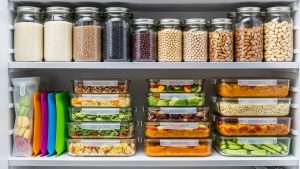
Glass Jars: Save every jar from pasta sauce, pickles, and jam. Soak off the labels. These are free storage containers for leftovers, pantry staples, or drinking glasses.
-
Silicone Bags: Brands like Stasher offer reusable silicone bags that replace Ziploc. They are dishwasher safe, freezer safe, and can even be used for sous-vide cooking.
-
Freezing in Glass: Yes, you can freeze glass. Just leave 1 inch of headspace at the top for expansion, and don’t tighten the lid until the food is frozen.
7. Regrowing Scraps: Free Food
Before you compost (as learned in Article 45), try to regrow.
-
Green Onions: Put the white root ends in a glass of water on the windowsill. They will regrow green tops in days. Infinite onions!
-
Celery/Lettuce: Place the base in water. It will sprout new leaves.
-
Herbs: keep stems in water to prolong life, or propagate roots to plant in soil.
Frequently Asked Questions (FAQs)
Q: Is zero waste expensive? A: There is an upfront cost (buying silicone bags or a good water filter), but long-term, it is cheaper. You stop buying paper towels, plastic wrap, and Ziploc bags forever.
Q: How do I handle trash bags? A: You will still have some trash. Use “recycled plastic” trash bags. Since you are composting wet food waste, your trash will be dry and won’t smell, so you can take it out less often.
Q: What about meat? A: Meat usually comes in Styrofoam. Bring your own container to the butcher counter (if they allow it) or choose a butcher wrapped in butcher paper (which is compostable if uncoated).
Q: Is silicone truly eco-friendly? A: Silicone is not biodegradable, but it is durable and inert (doesn’t leach chemicals). It is a better alternative to single-use plastic, but glass or metal is always superior for end-of-life disposal.
Conclusion
Completing a zero waste kitchen guide transformation doesn’t happen overnight. It is a slow process of swapping one item at a time. Do not aim for a mason jar of trash for the whole year; that is an impossible Instagram standard. Aim to reduce your waste by 50%. Aim to be more mindful. When you peel back the layers of plastic from your life, you find a lifestyle that is simpler, healthier, and deeply connected to the resources we consume.