Walking for Weight Loss: The Lazy Person’s Guide to Getting Fit
Introduction
Using walking for weight loss strategies sounds almost too good to be true, like a scam you would see on a late-night infomercial. We are conditioned to believe that fitness requires suffering. We think that if we aren’t dripping sweat, gasping for air on a treadmill, or lifting weights that make our muscles scream, we aren’t actually working out. I used to subscribe to this “no pain, no gain” mentality. I would sign up for expensive CrossFit classes, go three times, burn out, and then spend the next six months on the couch eating potato chips.
Then I broke my ankle. For months, the only exercise I was medically cleared to do was walking. Slowly. Reluctantly, I started walking around my neighborhood. Three months later, I stepped on the scale and realized I had lost 15 pounds without doing a single burpee. I was shocked.
In this comprehensive 1200-word deep dive, I will explain the metabolic science behind low-intensity cardio, debunk the arbitrary “10,000 steps” rule, and show you exactly how to structure walking for weight loss so you can burn fat without burning out.
1. The Science: Why “NEAT” Beats the Gym
To understand why walking works, you have to understand how your body burns calories. It isn’t just about the 45 minutes you spend in the gym; it is about what you do with the other 15 hours of the day.
This concept is called NEAT (Non-Exercise Activity Thermogenesis). NEAT includes everything that isn’t sleeping, eating, or dedicated sports-like exercise. It includes walking to the car, typing, cooking, and fidgeting. According to research from the Mayo Clinic, NEAT can account for a massive portion of your daily energy expenditure.
Here is the math:
-
Scenario A: You run for 30 minutes (burn 300 calories) but sit at a desk for the rest of the day.
-
Scenario B: You walk intermittently throughout the day for a total of 90 minutes (burn 400+ calories) and stay active.
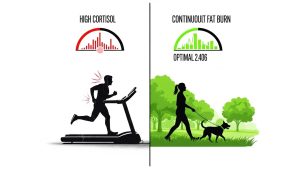
Walking keeps your metabolism humming all day long. It lowers cortisol (the stress hormone that makes you hold onto belly fat), whereas high-intensity interval training (HIIT) can actually spike cortisol in stressed individuals.
2. The “10,000 Steps” Myth: Where Did It Come From?
We all have fitness trackers that buzz when we hit 10,000 steps. But is that number scientific? Actually, no. It was a marketing campaign. In 1965, a Japanese company created a pedometer called Manpo-kei, which translates to “10,000 steps meter.” They chose the number because the Japanese character for 10,000 looks like a walking man. It was catchy.
So, do you need 10,000 steps? A study published in JAMA Internal Medicine found that while more steps are generally better, the health benefits (lower mortality rates) tend to plateau around 7,500 steps. If you are currently doing 2,000 steps, jumping to 10,000 is unsustainable. Start with 5,000. Consistency beats intensity. The goal of walking for weight loss is longevity, not hitting an arbitrary marketing number.
3. Power Walking vs. Strolling: The “Talk Test”
Not all walks are created equal. Window shopping at the mall doesn’t count as a workout. To trigger fat loss, you need to reach “Zone 2” cardio. This is the heart rate zone where your body primarily uses fat for fuel rather than carbohydrates.
The Talk Test:
-
Too Slow: You can sing a song without taking a breath. (Window shopping).
-
Too Fast: You can’t speak a full sentence without gasping. (Running).
-
Just Right (Zone 2): You can hold a conversation, but you would struggle to sing. You feel slightly breathless.
Aim to keep this pace for at least 30-45 minutes. This low-stress state signals your body to mobilize fat stores for energy.

4. How to Supercharge Your Walk (Rucking and Incline)
Once you master the daily walk, your body will adapt, and you will burn fewer calories doing the same distance. This is the plateau. To break through, you need to add resistance, not just time.
Method 1: The Incline If you are on a treadmill, set the incline to 12% and the speed to 3 mph (the famous “12-3-30” workout). Walking uphill recruits your glutes and hamstrings, burning up to 60% more calories than walking on a flat surface.
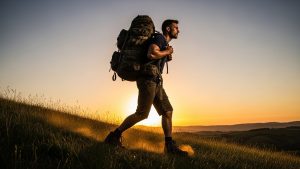
Method 2: Rucking “Rucking” is a military term for walking with a weighted backpack. You don’t need military gear; just put a few heavy books or water bottles in a backpack. Carrying an extra 10-20 lbs turns a simple walk into a strength-building exercise. It improves your posture (pulling your shoulders back) and builds bone density.
5. The Gear: Do You Need $200 Shoes?
Walking is the cheapest sport in the world, but your feet are the only equipment you have. Protecting them is non-negotiable. I made the mistake of walking 5 miles in Converse sneakers. I ended up with plantar fasciitis that sidelined me for weeks.
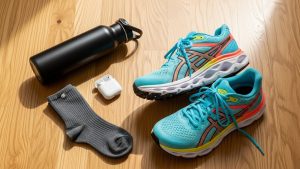
You need Running Shoes, not “Walking Shoes.” Running shoes generally have better cushioning and support. Look for brands like Brooks, Hoka, or Asics. Go to a store and get your gait analyzed. If you have flat feet, you need stability shoes. If you have high arches, you need neutral cushioning. Also, invest in socks that aren’t cotton. Cotton holds sweat and causes blisters. Look for synthetic blends or merino wool.
6. Making It a Habit: “Habit Stacking”
The hardest part isn’t the walking; it’s the getting out the door. Author James Clear suggests “Habit Stacking” in his book Atomic Habits. You tie the new habit (walking) to an existing habit.
-
After I eat lunch, I will immediately put on my shoes.
-
When I listen to my favorite podcast, I must be walking.
I personally only allow myself to listen to my favorite true-crime podcast when I am walking. If I want to know who the killer is, I have to walk. This turns the exercise into a reward rather than a chore.
Frequently Asked Questions (FAQs)
Q: Can I really lose belly fat just by walking? A: Yes. You cannot “spot reduce” fat (you can’t tell your body to only burn belly fat), but walking creates a calorie deficit. Combined with a decent diet, fat will come off your entire body, including your belly.
Q: Is walking inside as good as walking outside? A: Physically, yes. A mile is a mile. However, walking outside exposes you to sunlight (Vitamin D) and nature, which boosts mental health significantly more than staring at a wall in a gym.
Q: Should I carry hand weights? A: Generally, no. Carrying dumbbells in your hands can mess up your natural arm swing and cause shoulder or elbow strain. If you want extra weight, use a weighted vest or backpack (rucking).
Q: How much water should I drink? A: If you are walking for less than an hour, you probably don’t need to carry water unless it’s very hot. Hydrate before and after.
Conclusion
Walking for weight loss is the ultimate “tortoise and hare” strategy. It is not flashy. It won’t get you ripped abs in two weeks. But it is sustainable. You can do it when you are 20, and you can do it when you are 80. It heals your metabolism, clears your mind, and gently reshapes your body. Put on your shoes, open the door, and take the first step. The only bad walk is the one you didn’t take.