
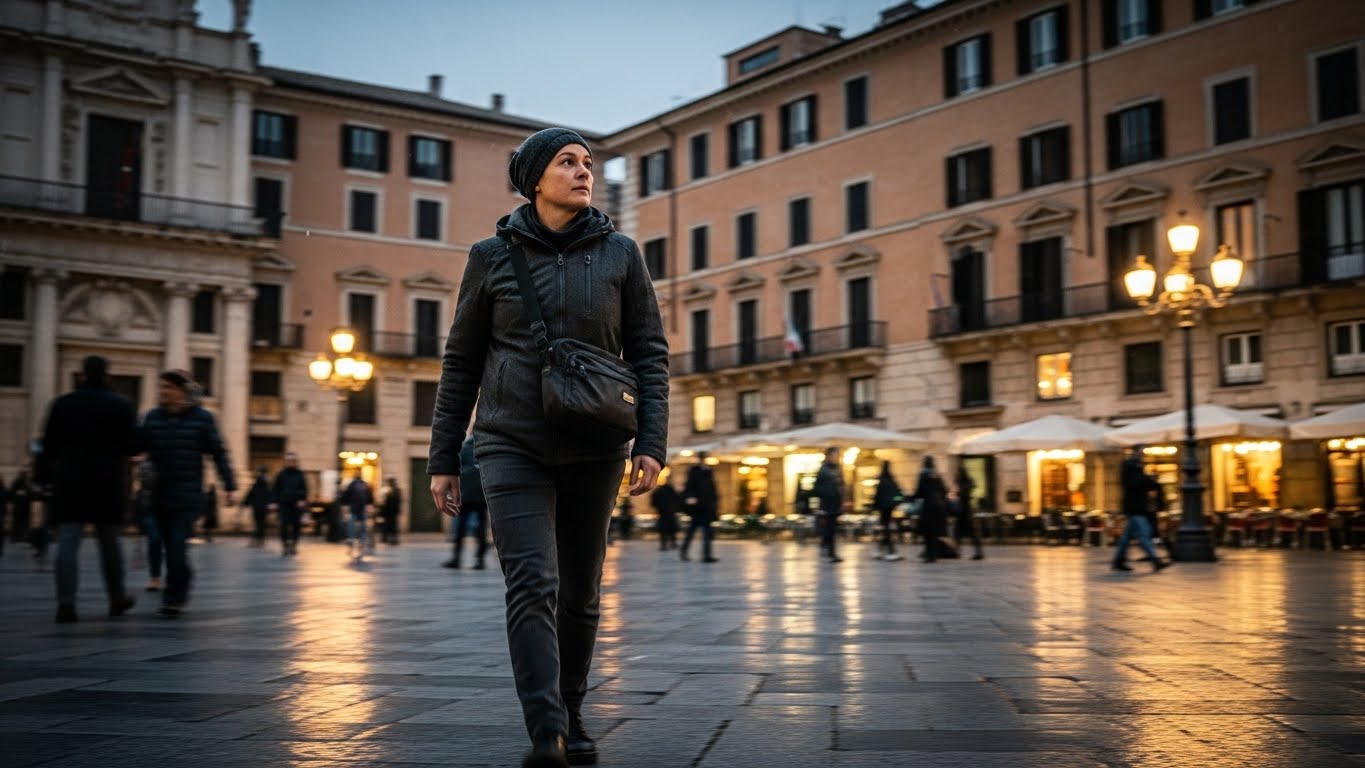
The Ultimate Travel Safety Guide: How to Spot Scams and Outsmart Pickpockets
Introduction
Searching for a travel safety guide is often done in a panic, usually sitting in a police station in a foreign country, trying to explain via Google Translate that your wallet was stolen. I learned this lesson the hard way in Paris. I was standing under the Eiffel Tower, mesmerized by the lights, when a friendly woman approached me asking if I dropped a gold ring. In the two seconds I looked down at the ring, her accomplice unzipped my backpack and vanished with my camera. It was a classic distraction scam, and I fell for it hook, line, and sinker.
Travel is beautiful, but it requires a specific kind of “street smarts” that we often turn off when we are in vacation mode. According to a report by the US Department of State, petty theft and pickpocketing are the most common crimes affecting tourists abroad. We walk around with maps, looking confused, carrying thousands of dollars in electronics—we are walking targets.
In this comprehensive 1200-word deep dive, I will decode the psychology of the “distraction scam,” explain why your back pocket is the worst place for your phone, and provide actionable strategies on how to spot scams before they happen, ensuring your memories are the only thing you take home.
1. The Psychology of Distraction: How Pickpockets Actually Work
Many people think pickpocketing is about stealth and speed. It is not. It is about attention management. A neuroscientist would tell you that the human brain can only focus on one thing at a time. Pickpockets exploit this. They create a “spike” of sensation or emotion (a bump, a loud noise, a spilled drink) that overrides your sensory input. While your brain is processing the spilled coffee on your shirt, it completely ignores the hand sliding into your pocket.
The “Cooper’s Color Code” of Awareness: Security experts often refer to the levels of situational awareness developed by Jeff Cooper.
-
White: Unaware and unprepared (Looking at your phone).
-
Yellow: Relaxed alert (Scanning the crowd, head up).
-
Orange: Specific alert (Focusing on a potential threat).
-
Red: Fight or flight.
To stay safe, you must live in Code Yellow. You don’t need to be paranoid; you just need to be present. Stop walking while looking at Google Maps. Stop at a wall, check your route, put the phone away, and then walk. This simple shift in body language signals to predators that you are alert, making you a harder target.

2. The Most Common Street Scams (and How to Beat Them)
Scams vary by region, but the mechanics are universal. Here are the three big ones you will encounter from Rome to Bangkok.
The “Friendship Bracelet” Scam:
-
The Setup: A friendly person approaches you and forcefully ties a bracelet around your wrist “for good luck” or “for the church.”
-
The Trap: Once it is on, they demand payment. If you refuse, they cause a scene, screaming that you are stealing from them.
-
The Counter: Keep your hands in your pockets or crossed. Do not engage. A firm “No” and keep walking. If they grab your arm, pull away aggressively. Politeness is your enemy here.
The “Broken Taxi Meter” Scam:
-
The Setup: You get in a taxi, and the driver says the meter is broken, or he offers a “flat rate” because of traffic.
-
The Trap: The flat rate is usually 3-4 times the actual metered price.
-
The Counter: Never get in a taxi without seeing the meter turn on. If they refuse, get out. Better yet, use ride-sharing apps like Uber or Grab. According to Uber’s Safety Report, using an app provides a GPS trail and driver identification, which drastically reduces the risk of scams compared to hailing random street cabs.
The “Spilled Sauce/Bird Poop” Scam:
-
The Setup: Someone “accidentally” spills ketchup, mustard, or fake bird poop on your jacket. They profusely apologize and start cleaning you off.
-
The Trap: While they are wiping your front, they (or a partner) are picking your pockets.
-
The Counter: Immediately back away. Do not let them touch you. Say “I will clean it myself” and walk into a store or hotel lobby.
3. Digital Safety: Protecting Your Data
Your physical wallet isn’t the only target. Your digital identity is worth far more. Public WiFi in airports and cafes is a playground for hackers. This is called a “Man-in-the-Middle” attack, where a hacker intercepts the data between your device and the WiFi router.
The VPN Necessity: Never connect to public WiFi without a Virtual Private Network (VPN). A VPN encrypts your data tunnel. Even if a hacker intercepts it, they only see gibberish. I recommend paid services like NordVPN or ExpressVPN over free ones, as free VPNs often sell your data.
The RFID Wallet Debate: You will see wallets marketed as “RFID Blocking” to stop high-tech thieves from scanning your credit cards remotely.
-
The Truth: While technologically possible, crimes involving RFID skimming are incredibly rare compared to simple physical theft. While an RFID wallet doesn’t hurt, it is not the priority. Focus on a wallet that is physically hard to access (like a money belt or a zipper pocket) rather than worrying about radio waves.
4. Gear That Actually Works: Anti-Theft Backpacks
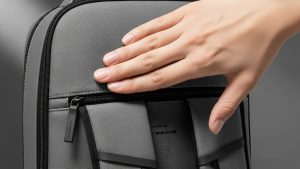
If you carry a regular Jansport backpack, a thief can unzip it while standing behind you on an escalator without you feeling a thing. Invest in an Anti-Theft Backpack. Brands like Pacsafe or Bobby design bags specifically for this.
Key Features to Look For:
-
Hidden Zippers: The zippers face your back, not the world. No one can unzip it while you are wearing it.
-
Slash-Proof Fabric: The material contains steel mesh so thieves cannot cut the bottom of the bag to let contents fall out.
-
Locking Cables: Some bags have a steel cable allowing you to lock the bag to a table leg while you eat.
If you don’t want to buy a new bag, use a simple Carabiner or a twisted paperclip to clip your zipper pull tabs together. It won’t stop a determined thief, but it stops the opportunistic “zip-and-run.”
5. Money Management: Don’t Put All Your Eggs in One Basket
The worst-case scenario is losing everything—your cash, your cards, and your passport—at once. This happens when you keep everything in one wallet. You need a “decentralized” money system.
The Stash Method:
-
The Decoy Wallet: Carry a cheap wallet in your pocket with $20 cash and an expired library card. If you are mugged, hand this over.
-
The Daily Wallet: Carry only what you need for the day (one credit card, ID copy, daily cash) in a secure front pocket or cross-body bag.
-
The Deep Stash: Keep your backup credit card, passport, and emergency cash ($100 USD is universally accepted) in the hotel safe or a hidden money belt under your clothes.
Banking Tip: Use a card like the Charles Schwab Investor Checking or Revolut that refunds ATM fees. This allows you to withdraw small amounts of cash frequently rather than carrying large wads of cash to avoid fees.
6. Solo Female Travel Safety: Specific Nuances
For women, safety involves an extra layer of vigilance regarding harassment. Resources like Solo Female Travelers offer excellent community-sourced safety ratings for destinations.
The “Fake Wedding Ring”: Wearing a simple gold band can deter unwanted romantic advances. It signals “I am taken” without you having to speak. Dress Like a Local: Research the dress code. If local women cover their shoulders and knees, you should too. Looking like a conservative local (or an expat) makes you less of a target than looking like a tourist in short shorts. Trust Your Gut: If a situation feels wrong, it is wrong. You do not need to be polite. If a stranger is asking too many questions (“Where are you staying?”, “Are you alone?”), lie. “My husband is meeting me here in 5 minutes” is a perfectly acceptable lie to tell to ensure your safety.

Frequently Asked Questions (FAQs)
Q: Should I carry my passport with me? A: Generally, no. Keep your passport in the hotel safe. Carry a color photocopy or a digital photo on your phone. The only exception is in countries where the law explicitly requires foreigners to carry original ID at all times (like Japan). Check local laws.
Q: Is it safe to sleep on trains? A: On overnight trains, safety varies. If you sleep, loop your backpack strap through your arm or leg, or lock it to the luggage rack. Never leave valuables on the table while you doze off.
Q: What if I get mugged? A: Give them the money. Your life is worth more than your iPhone. Do not fight back unless you are in immediate physical danger. Hand over the goods, observe details for the police report, and contact your embassy.
Q: Are money belts necessary? A: They are uncomfortable, but effective for transit days (moving from City A to City B). For daily walking, a zippered cross-body bag worn on the front is more practical and accessible.
Conclusion
Internalizing this travel safety guide is not about living in fear; it is about empowerment. When you know you have a backup credit card, when you know your bag is lockable, and when you know how to spot a scam artist from a block away, you walk differently. You walk with confidence. And in the animal kingdom of travel, predators look for the weak and confused. Be the confident traveler. Stay alert, stay safe, and explore the world without fear.