
The Ultimate Sustainable Travel Guide: How to Explore the World Without Ruining It
Introduction
Reading a sustainable travel guide often feels like a guilt trip, telling you that the only way to save the planet is to stay home and stare at a wall. But that isn’t realistic. We have an innate urge to explore. I remember standing on a pristine beach in Thailand, the water crystal clear, only to look down and see the sand mixed with microplastics and cigarette butts. It broke my heart. I realized that my presence there, along with millions of others, was slowly destroying the very beauty we came to admire.
Tourism accounts for roughly 8% of global greenhouse gas emissions. That is a staggering number. But travel also distributes wealth to developing nations and fosters cultural understanding. So, how do we balance this? The answer isn’t to stop traveling; it is to travel better.
In this comprehensive 1200-word deep dive, I will expose the truth about “Greenwashing” in hotels, explain why cruise ships are environmental disasters, and provide you with a practical sustainable travel guide to lower your footprint while raising the quality of your experience.
1. The Carbon Elephant: Planes vs. Trains
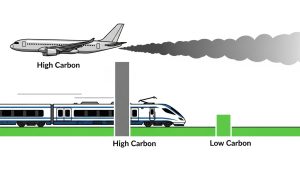
Let’s tackle the biggest issue first: Flying. A round-trip flight from New York to London emits about 1.7 metric tons of CO2 per passenger. To put that in perspective, the average person in some developing countries emits less than that in an entire year.
The Hierarchy of Transport:
-
Walk/Bike: Zero emissions.
-
Train: The gold standard. According to The Man in Seat 61, taking a train emits up to 90% less carbon than flying the same distance. Europe and Asia have incredible rail networks that make this easy.
-
Bus: surprisingly efficient because it packs many people into one vehicle.
-
Economy Flight: Yes, Economy is greener than Business Class because your “share” of the plane’s floor space is smaller.
If you must fly (and sometimes you must), fly direct. Takeoffs and landings burn the most fuel. And consider Carbon Offsetting. While controversial, buying offsets from reputable organizations like Gold Standard is better than doing nothing. It funds renewable energy projects to balance out your emissions.
2. Accommodation: Spotting “Greenwashing”
Many hotels claim to be “Eco-Friendly” just because they put a card on the bed asking you to reuse your towel. This is often Greenwashing. They do it to save money on laundry, not to save the planet, while still running air conditioning at 60°F in the desert with single-use plastic everywhere.
How to find the real deal: Look for legitimate certifications.
-
Green Key: A standard of excellence in environmental responsibility.
-
LEED Certification: Focuses on the building’s energy efficiency.
-
B Corp: Shows the company prioritizes social and environmental performance.
I once stayed at an eco-lodge in Costa Rica that didn’t just have a sign; they heated their water with solar power, composted all food waste, and employed only local staff. That is the difference between marketing and mission.
3. The Plastic Problem: Your Zero-Waste Kit
When you travel, you are often forced to rely on convenience items. Bottled water is the biggest culprit, especially in countries where tap water isn’t potable. In Southeast Asia alone, tourists leave behind millions of plastic bottles every year.
The Solution: You need a Water Purification Bottle (like Grayl or LifeStraw). These bottles have built-in filters that remove 99.99% of viruses, bacteria, and heavy metals. You can scoop water out of a hotel tap (or even a river) and drink it safely.
-
The Math: One filter costs $25 and replaces 300 plastic bottles. You save money and the ocean.
Also, pack a “Zero Waste Kit”:
-
A tote bag (for shopping).
-
Bamboo cutlery (so you don’t use plastic forks at street stalls).
-
A solid shampoo bar (no plastic bottles).

4. Reef-Safe Sunscreen: Saving the Corals
If you are swimming in the ocean, your sunscreen matters. Chemicals like Oxybenzone and Octinoxate—found in most popular sunscreen brands—are toxic to coral reefs. They cause coral bleaching, DNA damage, and death to baby coral. Even a single drop in a massive volume of water is harmful.
The Swap: Switch to Mineral Sunscreen (Zinc Oxide or Titanium Dioxide). It sits on top of your skin and reflects UV rays rather than absorbing them. It is physical protection. Check the label for “Non-Nano Zinc Oxide.” Places like Hawaii and Palau have actually banned toxic sunscreens to protect their ecosystems.
5. Animal Tourism: The Selfie Trap
We all love animals. But loving them means respecting them. If an attraction allows you to hug a tiger, ride an elephant, or swim with a captive dolphin, it is unethical. Wild animals do not interact with humans unless they have been broken, drugged, or starved.
The Rule: Only visit sanctuaries that prioritize the animal’s well-being over your entertainment.
-
Look for: No touching, no riding, no performing.
-
Example: Elephant Nature Park in Thailand allows you to observe elephants walking in the jungle, but you cannot ride them. This shift in demand forces the industry to change.

6. Supporting the Local Economy: Leakage
There is an economic concept in tourism called “Leakage.” This happens when you visit a country, but your money leaves. If you fly a foreign airline, stay in an international chain hotel, and eat at McDonald’s, up to 80% of your money “leaks” out of the local economy and goes back to corporate headquarters in the US or Europe.
How to stop Leakage:
-
Eat Local: Street food and family-owned restaurants put money directly into the pockets of locals.
-
Stay Local: Choose locally owned guesthouses or homestays over massive all-inclusive resorts.
-
Buy Local: Buy souvenirs from artisans, not mass-produced plastic trinkets made in factories.
When I visited Vietnam, I hired a local guide for a trekking tour instead of booking through a large international agency. He invited me to his home for lunch, and the money I paid went directly to his family’s education fund. That is sustainable impact.

7. The “Leave No Trace” Mindset
This principle, originally for hikers, applies to all travel. “Take only pictures, leave only footprints.” But take it a step further: “Leave it better than you found it.” If you go to the beach, spend 5 minutes picking up trash that isn’t yours. If you are hiking, pack out your apple core (it takes months to decompose and attracts wildlife to trails). Be mindful of your resources. Take shorter showers. Turn off the AC when you leave the hotel room. Just because you paid for it doesn’t mean you should waste it.
Frequently Asked Questions (FAQs)
Q: Is sustainable travel more expensive? A: Not necessarily. While eco-lodges can be pricey, taking trains, eating street food, and avoiding plastic water bottles actually saves you money. It is often cheaper to live like a local than like a tourist.
Q: Do carbon offsets actually work? A: It is complicated. They are not a “get out of jail free” card. Reducing your flights is better. However, high-quality offsets (verified by Gold Standard) do fund projects like reforestation and clean cookstoves that wouldn’t happen otherwise.
Q: How do I know if a sanctuary is real? A: Check reviews on TripAdvisor, but look specifically for negative reviews mentioning animal cruelty. Check their website. If they offer “interactions” or “shows,” it is likely a zoo in disguise.
Q: Can I travel sustainably on a cruise? A: It is very difficult. Cruise ships burn the dirtiest fuel (bunker fuel) and dump massive amounts of waste. If you must cruise, look for small-scale expedition cruises that have strict environmental protocols, but generally, cruising is the least sustainable way to travel.
Conclusion
Following a sustainable travel guide isn’t about being perfect; it is about being conscious. It is about realizing that your vacation is someone else’s home. By making small choices—refusing a plastic straw, taking a train instead of a short flight, respecting wildlife—you become part of the solution. The world is a fragile, beautiful place. Let’s make sure it stays that way for the generations of travelers who will come after us.