Stretching for Flexibility: How to Touch Your Toes (And Why It Matters)
Introduction
Starting a routine of stretching for flexibility usually happens the moment you groan while trying to tie your shoes. I remember the exact day I realized I had become “old.” I dropped my keys on the floor, bent over to pick them up with straight legs, and felt a sharp pull in my hamstrings that stopped me mid-way. My fingers were dangling six inches from the ground. I wasn’t even 30 yet, but my body felt like it was made of dried wood.
We assume that stiffness is just a natural part of aging. We say, “I’m just not flexible.” But flexibility is not a talent; it is a biological function. When we sit in chairs for 10 hours a day, our muscles adapt to that shape. Our hip flexors shorten, our hamstrings tighten, and our glutes turn off. According to Harvard Health Publishing, stretching keeps the muscles flexible, strong, and healthy, and we need that flexibility to maintain a range of motion in the joints. Without it, the muscles shorten and become tight.
In this comprehensive 1200-word deep dive, I will explain the science of the “Stretch Reflex,” why bouncing during a stretch is dangerous, and provide a step-by-step guide on stretching for flexibility to help you touch your toes and reclaim your mobility.
1. The Biology: Fighting the “Stretch Reflex”
Why does it hurt when you stretch? Your muscles have a built-in safety mechanism called the Myotatic Reflex (or Stretch Reflex). Inside your muscles, there are sensors called “Muscle Spindles.” When you stretch a muscle too fast or too far, these spindles send a panic signal to your spinal cord: “We are going to snap! Contract now!” Your muscle fights back and tightens up. This is why you feel resistance.
The Hack: To overcome this, you must hold a stretch gently for at least 30 seconds. After about 30 seconds, a different sensor called the Golgi Tendon Organ (GTO) activates. It says, “Okay, the tension is safe. You can relax.” This is called Autogenic Inhibition. If you only stretch for 10 seconds, you are just fighting the reflex. You need to wait for the GTO to release the brake.
2. Static vs. Dynamic: Timing is Everything
Not all stretching is the same. Doing the wrong one at the wrong time can actually cause injury.
-
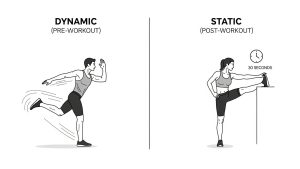
Dynamic Stretching (Motion): Moving a joint through its full range of motion (e.g., Arm Circles, Leg Swings).
-
When: Before a workout. It warms up the fluid in the joints and wakes up the nervous system.
-
-
Static Stretching (Stillness): Holding a position for time.
-
When: After a workout or before bed. According to the American Council on Exercise (ACE), static stretching temporarily weakens the muscle, so doing it before heavy lifting is counterproductive. Use it to cool down and lengthen.
-
3. The Big Three: Hips, Hamstrings, and Chest
If you sit at a desk, these are the three areas you must target.
The Hamstring Fix (Touching Your Toes): Don’t just bend over and force it.
-
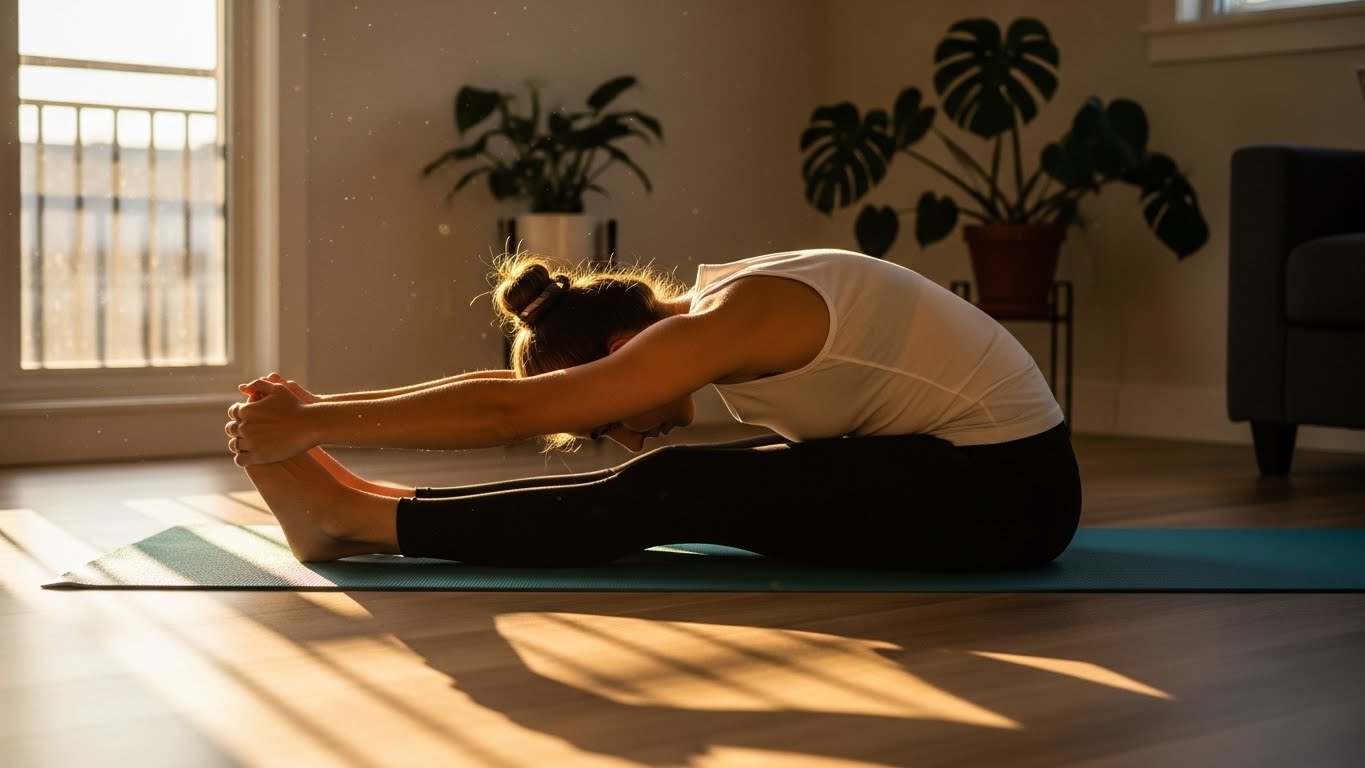
Sit on the floor with legs straight.
-
Hinge at your hips, not your waist. Keep your back flat.
-
Imagine trying to touch your belly button to your thighs, not your nose to your knees.
-
Use a yoga strap or belt around your feet if you can’t reach them. Pull gently.
The Hip Flexor Release: Tight hips cause lower back pain.
-
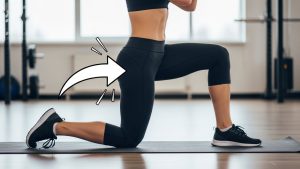
Kneel on one knee (propose position).
-
Squeeze the glute of the kneeling leg.
-
Push your hips forward slightly. You should feel a stretch in the front of the hip.
4. The Role of Breathing: Turning Off the Alarm
You cannot stretch a stressed body. If you are gritting your teeth and holding your breath, your nervous system thinks you are in danger (Fight or Flight). It will keep the muscles tight to protect them. You must switch to the Parasympathetic Nervous System (Rest and Digest).
The Technique:
-
Inhale for 4 seconds through the nose.
-
Exhale for 8 seconds through the mouth (like blowing through a straw).
-
On the exhale, imagine the muscle melting like butter. Deep, slow exhalation physically lowers your heart rate and tells your brain, “I am safe. Let go.”

5. Fascia: It’s Not Just Muscle
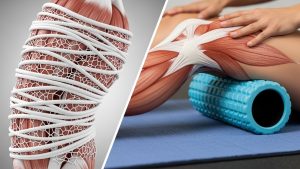
Sometimes, you aren’t stretching muscle; you are stretching Fascia. Fascia is the connective tissue web that wraps around every muscle and organ like a bodysuit. If you don’t move, fascia gets sticky and dehydrated (like beef jerky). Foam Rolling (Self-Myofascial Release): Before you stretch, use a foam roller. Rolling breaks up the “fuzz” or adhesions between the fascia layers, hydrating the tissue. Think of it like kneading dough before you try to stretch it into a pizza shape. It makes the tissue pliable.
6. A 10-Minute Daily Routine
You don’t need an hour of yoga. Consistency beats intensity. Do this every night while watching TV:
-
Neck Release: Ear to shoulder (30s each side).
-
Doorway Pec Stretch: Open up the chest (30s).
-
Seated Forward Fold: Hamstrings (60s).
-
Butterfly Stretch: Inner thighs (60s).
-
Child’s Pose: Lower back release (60s).
7. Patience: The 1-Millimeter Rule
Flexibility takes longer to build than strength. You might stretch for a week and see zero difference. Do not force it. If you force a stretch, you trigger the stretch reflex or tear a muscle. Aim for 1 millimeter of progress a day. It took years for your body to get this stiff; it will take months to undo it. But unlike strength, flexibility stays with you longer if you maintain it.
Frequently Asked Questions (FAQs)
Q: Should stretching be painful? A: No. It should be uncomfortable (a “sweet pain”), but never sharp or stabbing. On a scale of 1-10, aim for a 7. If you are shaking, you are going too hard.
Q: Can I stretch if I have hypermobility? A: Be careful. If you are “double-jointed,” you have loose ligaments. You don’t need to stretch your joints; you need to strengthen the muscles around them to provide stability. Focus on strength training instead.
Q: Why do my muscles shake when I stretch? A: That is your nervous system fatiguing or panicking. Back off slightly, breathe deeply, and wait for the shaking to stop before going deeper.
Q: Is it better to stretch in the morning or night? A: Night is usually better for static stretching because your body is already warm from the day, and it helps relax you for sleep. Morning stiffness requires gentle dynamic movement first.
Conclusion
Committing to stretching for flexibility is an investment in your independence. It determines whether you can tie your own shoes when you are 80. It determines whether you can reach the top shelf or look over your shoulder while driving. It is the unsung hero of fitness. So, get on the floor, take a deep breath, and reach for those toes. They are closer than you think.