Separation Anxiety in Dogs: How to Leave Your Home Without Guilt
Introduction
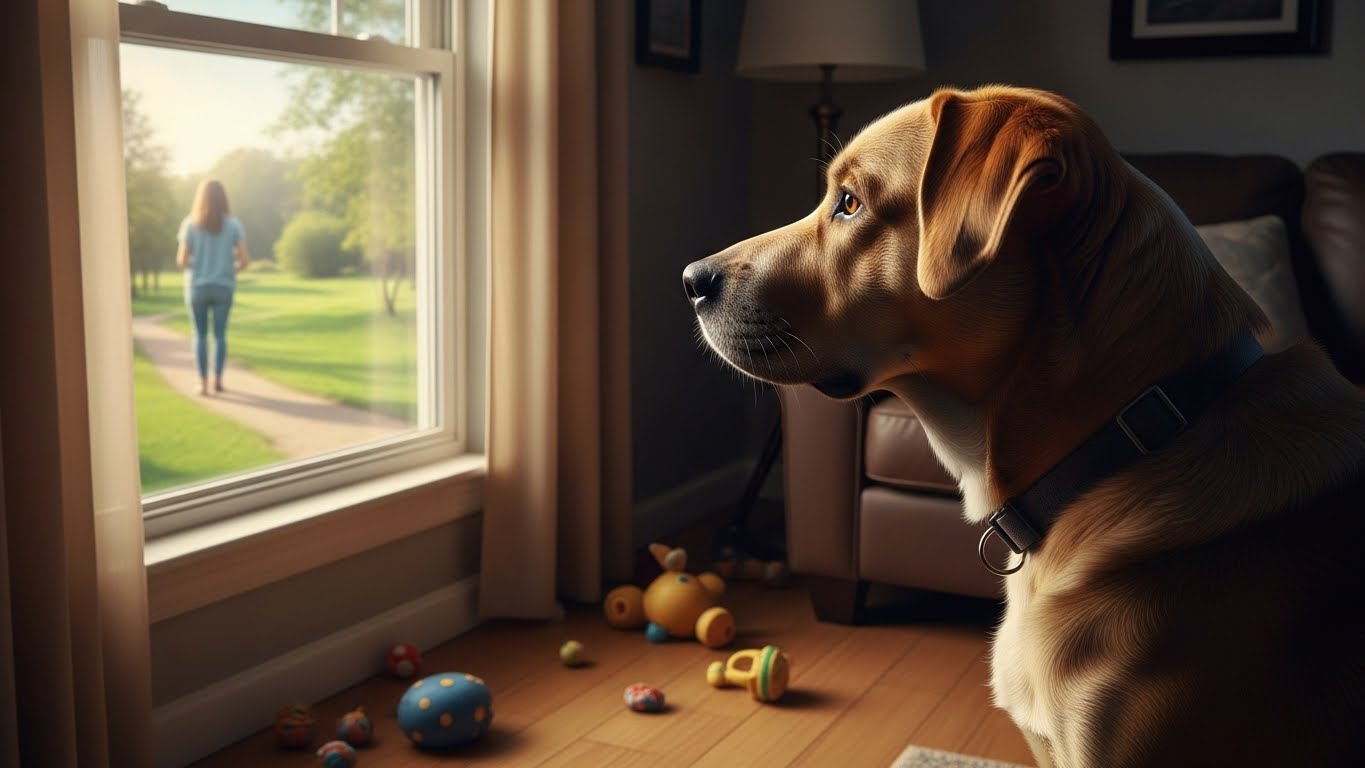
Dealing with separation anxiety in dogs is heartbreaking. I remember the first time I realized my rescue dog, Bailey, had it. I left the house for just 20 minutes to buy groceries. When I returned, I could hear her howling from the elevator. Inside, she had clawed at the door frame until her paws bled and shredded the mail. It wasn’t misbehavior; it was pure panic. I felt like a prisoner in my own home, unable to leave without causing my best friend immense suffering.
Many owners mistake this behavior for spite. They think, “He peed on the rug because he was mad I left.” This is a myth. Dogs do not feel spite. They feel terror. According to the ASPCA, separation anxiety is a panic disorder similar to a human panic attack. The dog is terrified of being abandoned.
In this comprehensive 1200-word deep dive, I will explain the psychology behind the panic, why “crate training” can sometimes make it worse, and provide a systematic desensitization plan to cure separation anxiety in dogs so you can reclaim your freedom.
1. The Science: Panic vs. Boredom
First, you must diagnose it correctly. Is your dog anxious, or just bored?
-
Boredom: A bored dog chews the sofa leg to pass the time. They might sleep for a bit, then wake up and find mischief.
-
Separation Anxiety: The dog panics the moment you leave (or even before). They pace, drool excessive amounts (hypersalivation), bark rhythmically, and try to escape.
The Cortisol Spike: When a dog with isolation distress sees you pick up your keys, their body floods with cortisol (stress hormone). By the time you open the door, they are already in “Fight or Flight” mode. They physically cannot control their bladder or their destructive impulses. Punishing them upon your return is useless and cruel because they cannot connect the punishment to the panic they felt an hour ago.
2. Step 1: Breaking the “Departure Cues”
Dogs are pattern recognition machines. They know you are leaving long before you walk out the door. Your routine is the trigger: Putting on shoes -> Grabbing keys -> Picking up bag -> Leaving. To fix separation anxiety in dogs, you must break this chain.
The “Fake Out” Exercise:
-
Put on your shoes. Then sit down and watch TV.
-
Pick up your keys. Walk to the kitchen and make coffee.
-
Put on your coat. Then take it off and read a book.
Do this 10-20 times a day without leaving. Eventually, the sound of keys jingling loses its power. It becomes “white noise” rather than a predictor of abandonment. This is called Desensitization.

3. Step 2: The Gradual Departure (Sub-Threshold Training)
Once the keys aren’t scary, you must train the actual departure. The Golden Rule: Never let the dog panic. If the dog panics, you have pushed too far, and you must regress. You need to keep them “Under Threshold.”
The Protocol:
-
Level 1: Walk to the door. Touch the handle. Return to the sofa. (Do this until the dog ignores you).
-
Level 2: Open the door. Close it immediately. Return.
-
Level 3: Step outside. Close the door. Wait 1 second. Return.
-
Level 4: Wait 5 seconds. Return.
This is tedious. It might take weeks to build up to 5 minutes. But you are teaching the dog’s brain a new truth: When they leave, they always come back. Using a camera (like a Furbo or Ring) is essential here so you can see if they are pacing or relaxing while you are outside the door.
4. Exercise and Enrichment: The Pre-Game
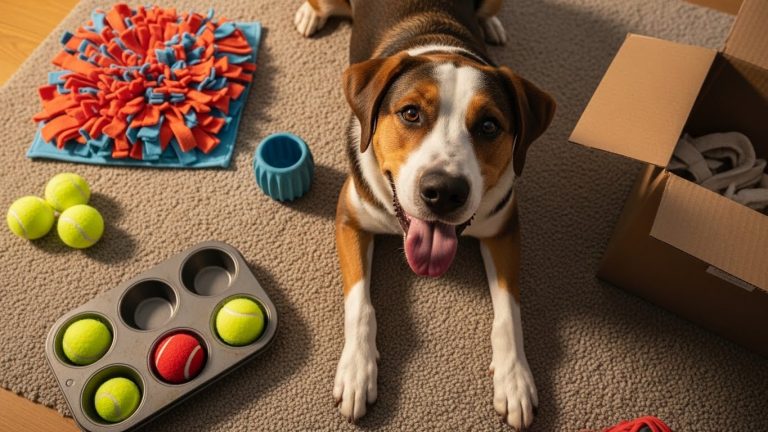
A tired dog has less energy to be anxious. However, a walk around the block isn’t enough. You need to deplete their mental energy. 30 minutes before you plan to leave (for real), engage in high-intensity exercise or scent work (like the “Sniffari” we discussed in previous articles). Then, give them a calming activity before you start your departure routine. A frozen Kong stuffed with peanut butter or a long-lasting chew gives them a job to do. Note: For severe cases, dogs won’t eat when anxious. If your dog ignores the steak, they are too panicked. Go back to Step 2.
5. Tools and Tech: Creating a Zen Zone
Environment matters. Leaving a dog loose in a big house can make them feel vulnerable. However, for some dogs with separation anxiety, a crate is a prison. They will break their teeth trying to get out. The “Confinement Anxiety” Nuance: If your dog hates the crate, try a “Safe Room” instead (like a bedroom or laundry room) gated off with a baby gate.
Calming Aids:
-
Pheromones: Diffusers like Adaptil release synthetic dog appeasing pheromones that mimic a nursing mother dog.
-
Music: A study by the Scottish SPCA found that reggae and soft rock music lower heart rates in dogs. Leave a playlist on.
-
Thundershirt: A compression vest that applies gentle pressure, like a swaddle for a baby.
6. Medication: When Training Isn’t Enough
There is a stigma against drugging dogs. But if your dog is hurting themselves or is in a state of constant terror, medication is a kindness. It creates a “chemical bridge.” It lowers the cortisol enough so that the training can actually work. Consult a veterinary behaviorist. Options range from daily SSRIs (like Prozac for dogs) to situational meds (like Gabapentin) for unavoidable absences. Medication is rarely a permanent fix, but it is a powerful tool in the rehab toolkit.

7. The “Cool” Departure and Return
We love our dogs, so we make a huge fuss. Leaving: “Oh my god, I’m gonna miss you! Be a good boy! Mommy loves you!” (High pitch, emotional). Returning: “I’m home! I missed you!” (Hugs, kisses, excitement).
This is a mistake. You are validating the event. You are telling the dog, “This IS a big deal! I am emotional, so you should be too!”
The Strategy:
-
Leaving: Be boring. Say nothing. Just walk out.
-
Returning: Be boring. Walk in, put down your keys, take off your shoes. Ignore the dog. Do not make eye contact or touch them until they are calm and all four paws are on the floor. This teaches the dog that your coming and going is a non-event. It’s as boring as you walking to the bathroom.

Frequently Asked Questions (FAQs)
Q: Should I get another dog to keep him company? A: Usually, no. Separation anxiety is about the attachment to you, not just loneliness. If you get a second dog, you will likely just have one anxious dog and one confused dog (or two anxious dogs).
Q: Can I use a bark collar? A: Absolutely not. Punishing an anxious dog for barking increases their anxiety. They might stop barking, but they will start self-mutilating or destroying things instead. You cannot punish fear.
Q: How long does it take to cure? A: It is a marathon, not a sprint. Mild cases take weeks. Severe cases take months or years. Progress is non-linear. You will have good days and bad days.
Q: What do I do if I have to go to work? A: While training, you simply cannot leave them alone for longer than they can handle. This is the hard truth. You need a pet sitter, a doggy daycare, or a friend to stay with them. Every time they panic, the brain pathways for anxiety get stronger.
Conclusion
Curing separation anxiety in dogs requires a massive amount of empathy. It asks you to restructure your life temporarily to help your dog feel safe. But the payoff is a confident, independent dog who knows that you will always return. When you can finally walk out the door, grab a coffee, and come home to a sleeping dog, you will know that every minute of the slow, boring training was worth it.