The Ultimate Pet Dental Care Guide: Stop the Stink and Save Their Life
Introduction
Searching for a pet dental care guide usually happens the moment your cute dog yawns in your face, and the smell nearly knocks you unconscious. We joke about “doggy breath” as if it is a normal part of owning a pet. I am here to tell you: It is not normal. That smell is the scent of active, rotting bacteria eating away at your best friend’s gum line.
When I adopted my rescue dog, Barnaby, his breath smelled like a swamp. I ignored it for a year. Then, he stopped eating his kibble. A trip to the vet revealed three abscessed teeth that had to be surgically extracted. The bill was $1,200. The guilt was far worse. I had let him live in chronic pain because I was too lazy to pick up a toothbrush. According to the American Veterinary Medical Association (AVMA), 80% of dogs and 70% of cats have some form of periodontal disease by the age of three.
In this comprehensive 1200-word deep dive, I will explain the biology of plaque, why you must never use human toothpaste, and the step-by-step training method to execute this pet dental care guide without losing a finger.
1. The Silent Killer: From Plaque to Heart Disease
Dental disease isn’t just about teeth; it is a systemic health crisis. Here is the biology:
-
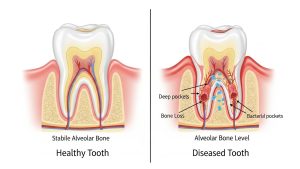
Plaque: Food particles mix with saliva to form a sticky film. (Removable by brushing).
-
Tartar (Calculus): If not removed in 24-48 hours, plaque hardens into rock-hard tartar. (Only removable by a vet tool).
-
Gingivitis: Bacteria burrow under the gum line, causing inflammation.
-
Systemic Spread: This is the scary part. The bacteria enter the bloodstream through the bleeding gums and travel to the Heart, Kidneys, and Liver, causing organ failure over time.
By ignoring their teeth, you aren’t just risking bad breath; you are risking their lifespan.
2. The Gear: Why Human Toothpaste is Poison
Before you start, throw away your Colgate. NEVER use human toothpaste on a pet. Most human toothpastes contain Fluoride (toxic if swallowed) and foaming agents that cause stomach upset. Even worse, many now contain Xylitol (Birch Sugar), an artificial sweetener. Xylitol is deadly to dogs. Even a small amount causes a massive insulin spike, leading to hypoglycemia, seizures, and liver failure within minutes.
What to Buy:
-
Enzymatic Toothpaste: This is the secret weapon. It contains enzymes (like Glucose Oxidase) that chemically break down plaque. Even if you just smear it on their teeth and they lick it, it does some work. Flavors like Chicken or Peanut Butter make it a “treat.”
-
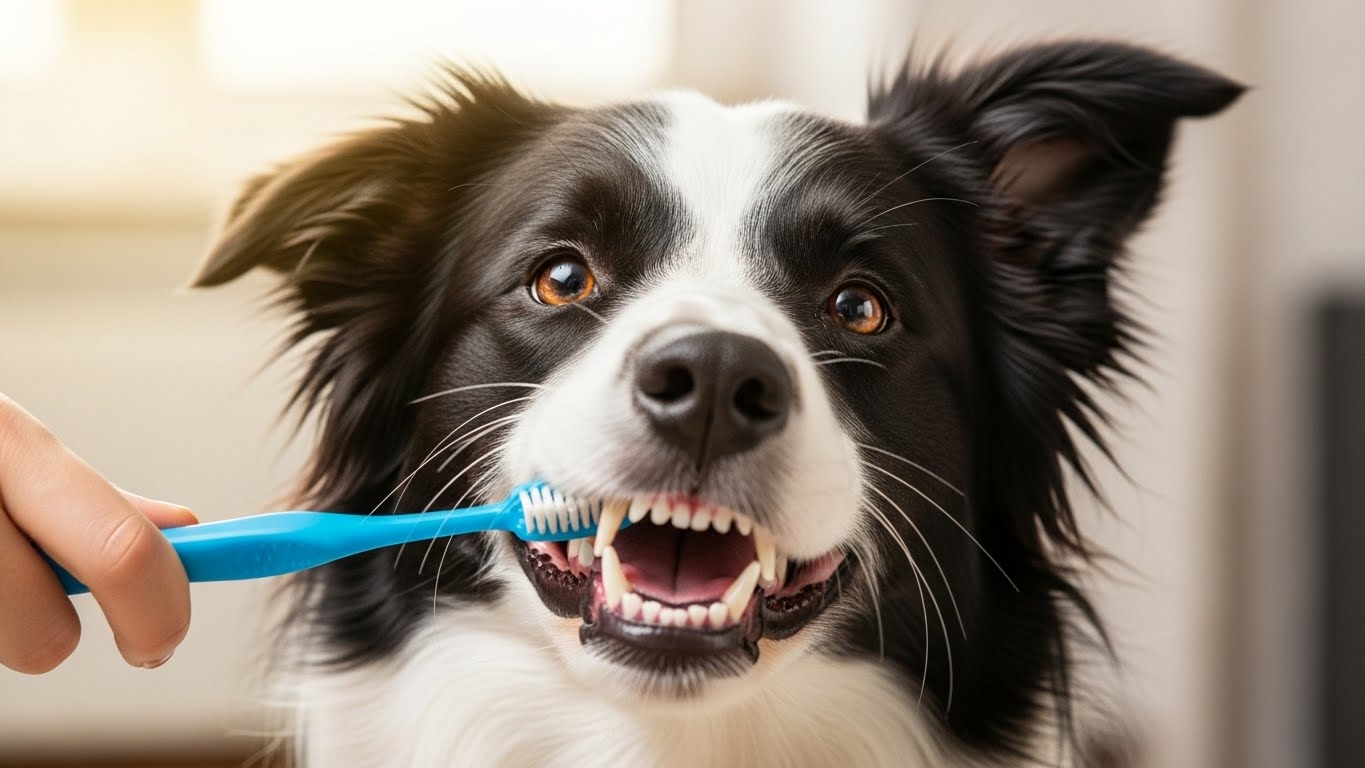
Finger Brush: Best for beginners. It fits over your finger, giving you tactile control.
-
Dual-Ended Brush: For larger dogs with long snouts.
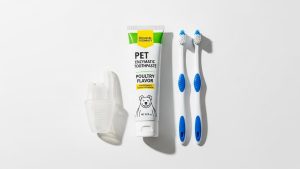
3. The Training: The 4-Week Desensitization Protocol
You cannot just shove a brush into a dog’s mouth. They will panic and bite. You need to play the long game.
-
Week 1: The Taste Test. Put a dab of toothpaste on your finger. Let them lick it. Praise them. Do this every day. You are teaching them: Toothpaste = Yummy Treat.
-
Week 2: The Lift. Put the paste on your finger. Briefly lift their lip and rub it on one canine tooth. Treat immediately.
-
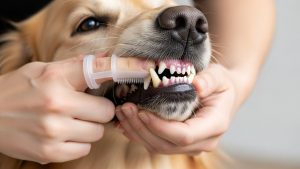
Week 3: The Finger Brush. Introduce the silicone finger brush with paste. Do 5 seconds of rubbing. Stop before they struggle.
-
Week 4: The Real Deal. Move to the back molars. Focus on the outside of the teeth (where the cheek touches). You don’t need to brush the inside (the tongue cleans that).
4. Alternatives: Chews, Powders, and The “VOHC” Seal
“My dog tries to eat the brush. What else can I do?” While brushing is the gold standard, doing something is better than nothing. However, the pet market is full of snake oil.
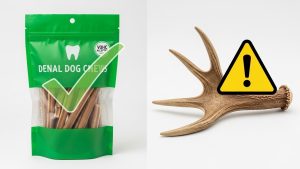
Look for the VOHC Seal: The Veterinary Oral Health Council (VOHC) tests products scientifically. If a product has their seal, it is proven to reduce plaque/tartar.
-
Dental Chews (Greenies/Oravet): They work by mechanical scraping.
-
Water Additives: Chemicals added to the water bowl to reduce bacterial load.
-
Powder (Kelp): Sprinkled on food. Some studies suggest it softens tartar, but it is not a standalone cure.
Warning on Bones: Real bones (antlers/marrow bones) are often too hard. They can fracture the “slab” of the upper carnassial tooth. If you can’t indent the chew with your thumbnail, it might break your dog’s teeth.
5. Signs of Dental Pain (They Won’t Cry)
Dogs and cats are masters at hiding pain. By the time they whine, it is excruciating. Watch for these subtle signs:
-
Dropping Food: They pick up kibble and drop it, or chew on only one side.
-
Chattering: Their jaw trembles.
-
Head Shy: They pull away when you try to pet their head or chin.
-
Blood on Toys: If you see pink spots on their chew toys, their gums are bleeding.
6. The Anesthesia Debate: Why “Non-Anesthetic” is a Scam
You might see groomers offering “Anesthesia-Free Dental Cleaning.” Avoid this. It is purely cosmetic. They scrape the tartar off the visible white part of the tooth (the crown). But periodontal disease happens under the gum line. Imagine going to a dentist who only brushed the front of your teeth but never cleaned the pockets or took X-rays. Your teeth would look white, but they would rot from the root. A proper dental cleaning requires general anesthesia so the vet can scale under the gums, polish the enamel (to prevent future sticking), and take X-rays. Yes, anesthesia carries a small risk, but untreated infection carries a 100% guarantee of health damage.
Frequently Asked Questions (FAQs)
Q: How often should I brush? A: Ideally? Every day. Realistically? Aim for 3 times a week. Plaque hardens in 48 hours, so brushing once a week is mostly useless.
Q: Can I use baking soda? A: No. Baking soda is high in sodium and can upset their electrolyte balance if swallowed. It also tastes terrible to dogs.
Q: Does dry food clean teeth? A: Mostly a myth. Most kibble shatters immediately. It provides zero scraping action. Prescription dental diets (like Hill’s t/d) are different; the kibble is huge and fibrous, scrubbing the tooth before breaking.
Q: My cat’s breath smells like fish. Is that normal? A: A mild food smell is normal. A strong, foul odor usually indicates stomatitis or rotting teeth. Cats are prone to “Resorptive Lesions” where the body dissolves the tooth. This is incredibly painful and requires vet care.
Conclusion
Following a pet dental care guide is the single most effective way to save money on vet bills and extend your pet’s life. It takes patience to train them, and discipline to remember to do it. But when your dog is 14 years old and still chewing happily on his favorite toy because he has a healthy mouth, you will know the effort was worth it. Start today—buy the enzymatic paste, and banish the “doggy breath” for good.