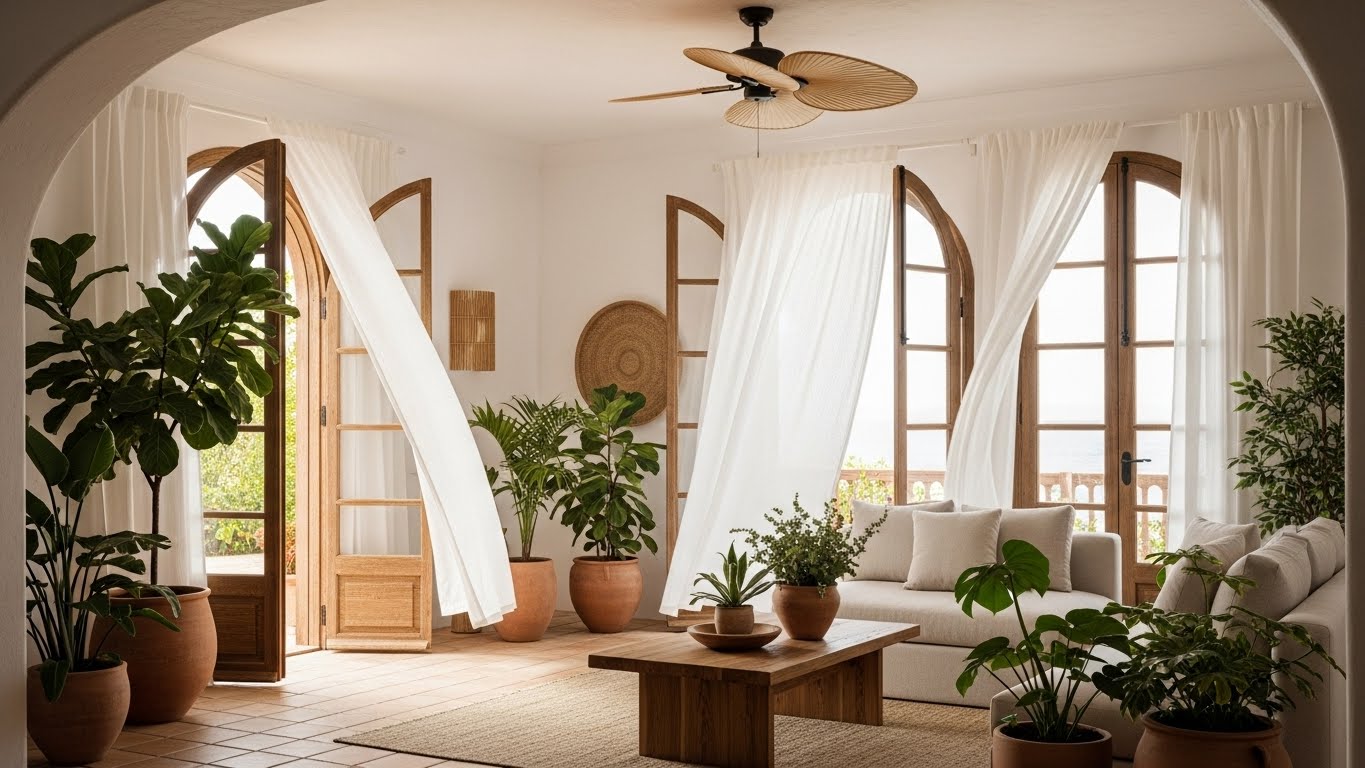
Passive Cooling Techniques: How to Keep Your Home Cool Without AC
Introduction
Implementing passive cooling techniques usually becomes a necessity when your air conditioner breaks down in the middle of a heatwave, or when you see your electric bill and realize you are paying a second rent just to stay comfortable. I grew up in a house without central AC. We learned to live with the rhythm of the sun. We closed the windows at dawn and opened them at dusk. It wasn’t suffering; it was strategy.
Today, we have become dependent on mechanical cooling. We build glass boxes that trap heat and then spend a fortune trying to pump that heat back out. According to the International Energy Agency (IEA), the demand for space cooling is set to triple by 2050, putting immense strain on our power grids and climate. But what if you could cool your home using nothing but physics?
In this comprehensive 1200-word deep dive, I will explain the “Stack Effect,” why humidity is the enemy of comfort, and provide actionable passive cooling techniques that work in modern apartments just as well as they did in ancient architecture.
1. The Stack Effect: Using Heat to Move Air
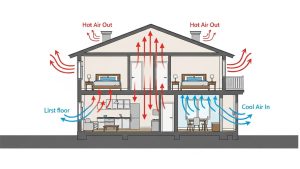
Hot air rises. We all know this, but we rarely use it to our advantage. The Stack Effect (or Chimney Effect) uses this principle to create a natural vacuum that pulls cool air in.
How to create it:
-
Open the highest windows in your house (or skylights/attic vents). This lets the hot air escape.
-
Open the lowest windows on the shady side of the house.
-
As the hot air rushes out the top, it creates low pressure inside, physically sucking cool air in from the bottom windows.
This creates a constant breeze without a fan. If you live in a single-story apartment, you can mimic this by opening windows on opposite sides to create Cross Ventilation. The key is to have an “Inlet” (Cool side) and an “Outlet” (Hot side).
2. Shading: Stopping the Heat Before It Enters
Once heat is inside your home, it is hard to get rid of. The best strategy is prevention. Sunlight hitting glass is essentially a heater. External Shading is Superior: Curtains inside help, but by the time the light hits the curtain, the heat is already inside the glass.
-
Awnings: Install simple canvas awnings over south and west-facing windows.
-
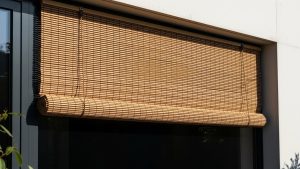
Bamboo Blinds: Hang these outside the window. They block the sun but allow breeze to pass through.
-
Deciduous Trees: Plant a tree on the west side. In summer, leaves block the sun. In winter, leaves fall, letting the sun warm the house.
3. The Evaporative Cooling Hack (The Swamp Cooler)
If you live in a dry climate (low humidity), evaporation is your best friend. When water evaporates, it absorbs heat energy from the air, cooling it down. This is why you sweat.
The DIY Swamp Cooler:
-
Take a large bowl of ice water.
-
Place it directly in front of a floor fan.
-
Point the fan at you. As the air blows over the ice and water, it picks up moisture and drops in temperature. Alternatively, hang a damp sheet in front of an open window. The breeze passing through the wet fabric will cool the room by several degrees. Note: This does not work in humid climates (like Florida or Southeast Asia) because the air is already saturated.
4. Thermal Mass: Night Purging
Materials like stone, concrete, and brick have high Thermal Mass. They absorb heat slowly and release it slowly. In a heatwave, your walls absorb heat all day. At night, they radiate that heat back into the house, keeping it hot even if it’s cool outside.
The Strategy: Night Purging You must “flush” the heat out at night.
-
As soon as the outside temperature drops below the inside temperature (usually 8 PM), open everything.
-
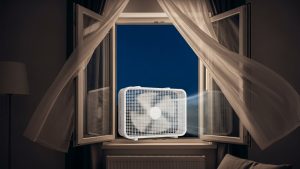
Use box fans in windows blowing out to exhaust the stored heat.
-
In the morning, as soon as the sun hits, close all windows and blinds. You are trapping the cool night air inside.
5. Internal Heat Gains: Turn It Off
You are fighting a losing battle if you are trying to cool a house while simultaneously heating it from the inside. The Culprits:
-
Incandescent Bulbs: They are 90% heat, 10% light. Switch to LEDs immediately.
-
The Oven: Do not roast a chicken in July. Use a microwave, air fryer, or grill outside.
-
Dishwasher/Dryer: These machines generate massive heat. Run them only at night or air dry your clothes and dishes.
6. Personal Cooling: Cool the Body, Not the Room
If you can’t get the room to 70°F, focus on your biology. You feel heat primarily through your pulse points.
-
Cold Compress: Put a cold washcloth on your neck or wrists.
-
Menthol Soap: Use a peppermint soap like Dr. Bronner’s. The menthol triggers cold receptors in your skin, making you feel physically colder even if the temperature hasn’t changed.
-
Cotton/Linen: Sleep in natural fibers. Polyester sheets trap heat and sweat.

7. Roof Cooling: The White Paint Solution
Dark roofs absorb up to 90% of the sun’s heat, transferring it directly into your attic and living space. White roofs reflect it. If you own your home, painting your roof with a reflective white coating (Cool Roof) can lower the roof surface temperature by up to 50°F. For renters, you can’t paint the roof, but you can put reflective foil insulation in your attic hatch or windows to bounce the heat back.
Frequently Asked Questions (FAQs)
Q: Does putting a fan in the window really help? A: Yes, but direction matters. If it’s hotter outside, close the window. If it’s cooler outside, point the fan blowing in on the shady side and out on the sunny side to create a flow.
Q: Do dehumidifiers cool the room? A: Technically, no. They actually generate a little heat from the motor. However, they make you feel cooler because dry air allows your sweat to evaporate faster. In humid climates, a dehumidifier is more valuable than a fan.
Q: Can I use aluminum foil on windows? A: Yes, it reflects heat effectively. It looks ugly (like a spaceship), but in an extreme heatwave, function beats fashion. Tape it to the inside of the glass, shiny side out.
Q: Are ceiling fans better than floor fans? A: Yes. They circulate air more efficiently. Make sure your ceiling fan is spinning counter-clockwise in the summer to push air straight down (wind chill effect).
Conclusion
Mastering passive cooling techniques is about reconnecting with nature’s rhythms. It requires you to be active—opening windows at night, closing blinds in the morning, and chasing the shade. It is not as convenient as pressing a button on a remote, but it is free, sustainable, and resilient. When the power goes out during the next summer storm, you won’t be the one panicking; you’ll be the one opening the top windows and letting physics do the work.