How to Stop Killing Your Indoor Plants: A Survival Guide for Brown Thumbs
Introduction
Learning how to stop killing your indoor plants is usually a journey paved with good intentions and dead leaves. I used to joke that I was a “plant serial killer.” I would walk into a nursery, fall in love with a beautiful Fiddle Leaf Fig, bring it home, name it, and watch helplessly as it turned brown and dropped every single leaf within two weeks. I thought I just didn’t have a “green thumb.”
But here is the secret: There is no such thing as a green thumb. There is only observation and knowledge. We treat plants like furniture—we put them where they look good, not where they can survive. We treat them like pets—we water them on a schedule because we eat on a schedule, ignoring the fact that plants don’t drink water; they absorb it based on evaporation.
In this comprehensive 1200-word deep dive, I will explain the physics of soil moisture, debunk the myth of “low light” plants, and provide you with the exact blueprint on how to stop killing your indoor plants so you can finally build that urban jungle you’ve been dreaming of.
1. The Number One Killer: Overwatering (The “Love” Trap)
If you take nothing else from this article, remember this: You are likely drowning your plants. Overwatering is responsible for 90% of indoor plant deaths. When you keep the soil constantly wet, the roots sit in stagnant water. This depletes the oxygen in the soil. Without oxygen, the roots cannot breathe. Anaerobic bacteria take over, the roots turn to mush (Root Rot), and the plant dies of thirst because it has no roots left to drink with.
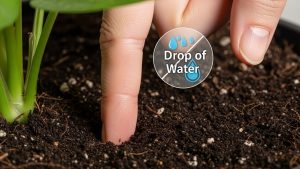
The Fix: The Finger Test Stop following a schedule. Don’t water every Sunday just because it’s Sunday. Instead, stick your index finger 2 inches deep into the soil.
-
Is it damp? Do not water. Walk away.
-
Is it dry? Water thoroughly until water comes out of the drainage hole.
According to the Royal Horticultural Society (RHS), most houseplants prefer to dry out slightly between waterings. It mimics their natural environment where it rains heavily and then stays dry for days.
2. Understanding Light: “Low Light” Does Not Mean “No Light”
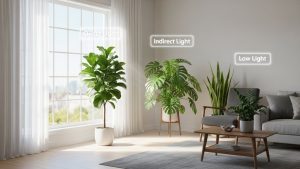
This is the second biggest mistake. We buy a “low light” Snake Plant and stick it in a windowless bathroom because it looks spa-like. Biology 101: Plants need light to make food (Photosynthesis). No light = Starvation. To a plant, “Low Light” means “I can read a book comfortably in this spot without a lamp.” If you can’t read a book there at noon, your plant is starving.
Window Direction Matters:
-
South Facing: The powerhouse. Bright, direct light all day. Put your Cacti and Fiddle Leaf Figs here.
-
North Facing: Low, indirect light. Good for Pothos and ZZ Plants.
-
East Facing: Gentle morning sun. Most tropical plants love this.
-
West Facing: Hot afternoon sun. Can burn delicate leaves.
If you have a dark apartment, buy a Grow Light. A simple $20 LED bulb can save your plants’ lives.
3. The “Unkillable” Starter List
If you have a history of plant murder, stop buying Calatheas and Ferns. They are drama queens that require high humidity and distilled water. Start with the “Cast Iron” plants. These are plants that thrive on neglect.
-
Snake Plant (Sansevieria): You can water this once a month. It tolerates low light. It is virtually indestructible.
-
ZZ Plant (Zamioculcas zamiifolia): Evolved in drought-prone Africa. It stores water in potato-like rhizomes under the soil. If you forget it for 6 weeks, it will likely be fine.
-
Pothos (Devil’s Ivy): It grows fast, trails beautifully, and “talks” to you. When it’s thirsty, the leaves droop dramatically. You water it, and perks up in an hour.
4. Soil and Drainage: The “Pot within a Pot” Method
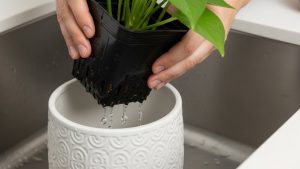
Many decorative pots (the ceramic ones that look nice) do not have drainage holes. If you plant directly into a pot with no hole, the water has nowhere to go. It pools at the bottom and causes root rot.
The Strategy: Keep your plant in the ugly plastic “nursery pot” (with the holes) that it came in. Place that plastic pot inside the decorative ceramic pot. When you water, take the plastic pot out, water it in the sink, let it drain, and put it back. This ensures your furniture stays dry and your plant never sits in a puddle. This simple trick is often cited by experts at university extensions like Clemson University Home & Garden as a best practice for indoor gardening.
5. Dust and Pests: The Silent Killers
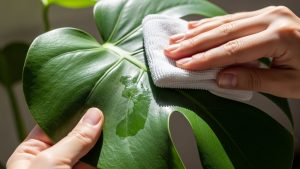
In nature, wind and rain clean the leaves. In your apartment, dust accumulates. A layer of dust blocks sunlight, reducing photosynthesis efficiency. The Fix: Wipe your broad-leaf plants (like Monsteras) with a damp microfiber cloth once a month.
Pest Patrol: If you see tiny webs (Spider Mites) or white cottony fluff (Mealybugs), isolate the plant immediately.
-
Neem Oil: This is your best friend. It is a natural pesticide derived from the neem tree. Spray it on the leaves to suffocate pests.
-
Prevention: Inspect every new plant before you put it next to your old ones. I learned this the hard way when a $5 fern infested my entire collection with spider mites.
6. The Humidity Issue
Most houseplants are tropical. They want 60-80% humidity. Our air-conditioned or heated homes usually have 30-40% humidity. This causes “crispy tips” (brown edges on leaves).
Myths vs. Reality:
-
Misting: Spraying water on leaves does almost nothing. It evaporates in 5 minutes.
-
Pebble Tray: Putting water and pebbles under the pot helps slightly.
-
Humidifier: This is the only real solution. If you are serious about tropical plants, run a humidifier in the winter.
7. Repotting: Don’t Rush It
New plant parents love to repot immediately. “It needs more room to grow!” Actually, most plants like being “root bound” (tight in their pot). Repotting is stressful. It damages the tiny root hairs. Only repot if you see roots growing out of the bottom holes or if the soil dries out in 2 days. When you do repot, only go up one size (e.g., 4-inch pot to 6-inch pot). If you put a small plant in a giant pot, the soil will stay too wet, leading to rot.
Frequently Asked Questions (FAQs)
Q: Why are my leaves turning yellow? A: The classic mystery. Yellow leaves usually mean overwatering. Check the soil. If it’s wet, let it dry out completely. Occasionally, it means a nutrient deficiency, but 9/10 times, it’s too much love (water).
Q: Can I use tap water? A: It depends. Some plants (like Calathea and Spider Plants) are sensitive to the fluoride and chlorine in tap water. They will get brown tips. For these divas, use distilled or rain water. For most others, letting tap water sit out for 24 hours (so chlorine evaporates) helps.
Q: How do I know if my plant is dead or dormant? A: Scratch the stem with your fingernail. If it is green underneath, it is alive! If it is brown and brittle all the way through, it is gone. Composting it is the final act of love.
Conclusion
Mastering how to stop killing your indoor plants is a lesson in patience. You will kill a few plants along the way. That is the tuition fee for learning gardening. But once you understand the rhythm of light and water, you will stop seeing plants as decorations and start seeing them as living roommates. There is a profound mental health benefit to caring for something alive. So go buy that Pothos, put it in a bright spot, and for the love of chlorophyll, put the watering can down.