How to Soundproof a Room Cheaply: The Ultimate DIY Guide
Introduction
Learning how to soundproof a room cheaply is often the only thing standing between you and a good night’s sleep, especially if you live in a busy city or have noisy roommates. I still remember my first apartment in downtown Chicago. It was charming, affordable, and located directly next to the elevated train tracks. Every 15 minutes, my walls would shake, and my Zoom calls would be interrupted by the screeching of metal wheels. I felt helpless. I thought soundproofing required a construction crew and thousands of dollars to tear down drywall.
I was wrong. After weeks of desperate research and trial and error, I discovered that soundproofing isn’t magic; it’s physics. You don’t always need expensive acoustic foam. Sometimes, you just need heavy blankets, a tube of sealant, and a rearrangement of your furniture.
In this comprehensive 1200-word deep dive, I will explain the difference between “sound absorption” and “sound blocking,” debunk the famous “egg crate myth,” and show you exactly how to soundproof a room cheaply using materials you likely already own or can buy at a local hardware store for under $50.
1. The Science of Silence: Blocking vs. Absorbing
Before we start moving furniture, you need to understand what you are fighting. Sound travels in waves. When those waves hit a wall, they either pass through it (transmission) or bounce off it (reflection).
To fix your noise problem, you need to understand two distinct concepts:
-
Sound Blocking (Isolation): This prevents sound from entering or leaving the room. This requires Mass. Think of a thick concrete wall. Heavy things stop sound waves.
-
Sound Absorption: This stops sound from bouncing around inside the room (echo). This requires Softness. Think of a fluffy rug or velvet curtains.
Most DIY solutions focus on absorption because it is cheaper. While absorption won’t block the train noise completely, it reduces the overall “noise floor” of the room, making it feel significantly quieter and calmer. According to acoustic principles explained by sources like ScienceDirect, increasing the mass and sealing air gaps are the most effective ways to reduce sound transmission.
2. The “Swiss Cheese” Theory: Seal the Gaps
Imagine your door is a submarine hatch. If there is even a tiny pinhole, water will rush in. Sound works the same way. If air can get in, sound can get in. The biggest culprit in any room is the Door. Interior doors are usually hollow (low mass) and have massive gaps at the bottom.
The Fix:
-
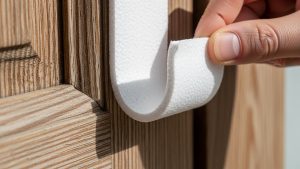
Weatherstripping: Go to a hardware store and buy adhesive foam weatherstripping tape (about $10). Stick it around the door frame where the door touches the jamb.
-
The Door Sweep: The gap at the bottom of the door is a sound highway. Install a rubber door sweep or use a heavy “draft stopper” (a fabric tube filled with rice or sand).
I did this to my home office door, and the noise from the living room TV dropped by about 50%. It is the single most cost-effective step in learning how to soundproof a room cheaply.
3. The “Library Effect”: Using Furniture as a Sound Barrier
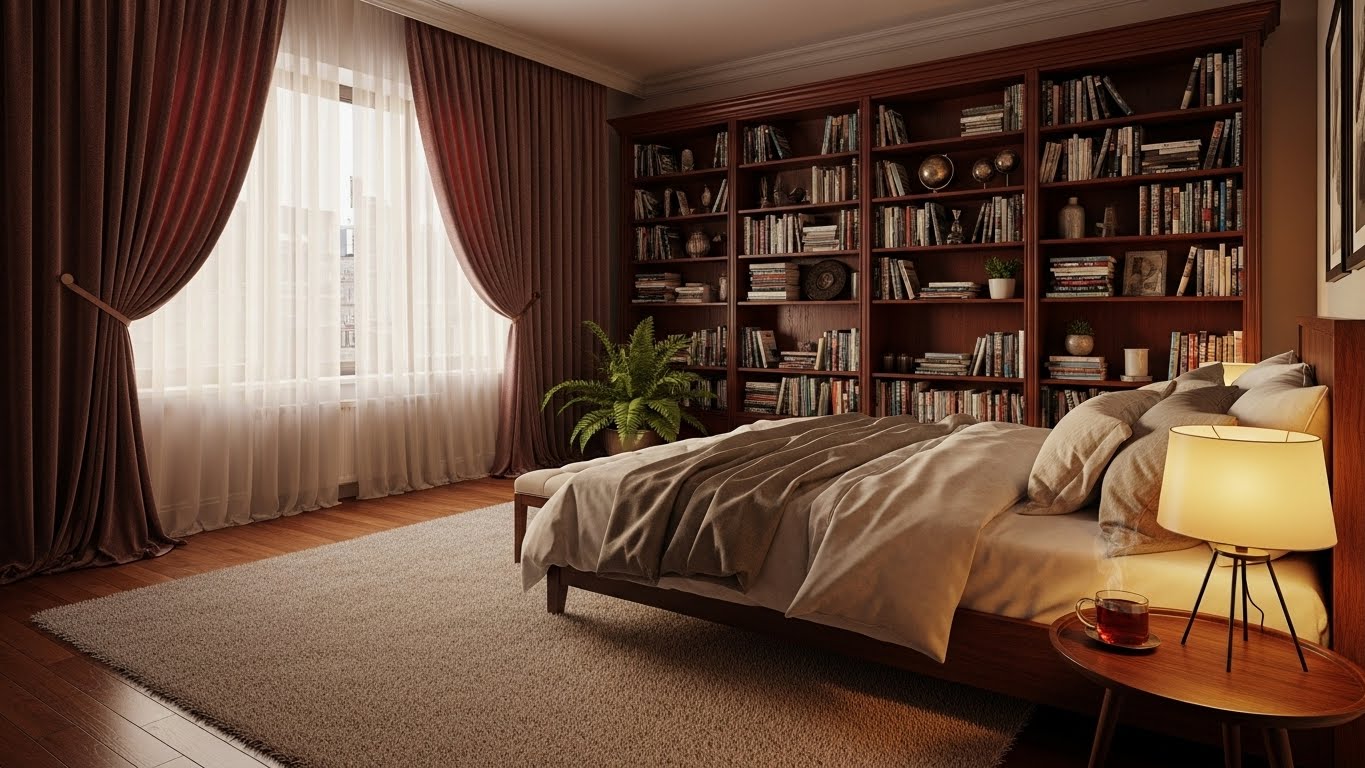
You don’t need to build a new wall; you just need to thicken the existing one. If you have a thin wall shared with a noisy neighbor, add mass to it. How? Bookshelves.
Books are heavy. Paper is dense. A floor-to-ceiling bookshelf filled with books acts as a phenomenal sound barrier. It adds mass (blocking sound) and the irregular shape of the books breaks up sound waves (diffusion), stopping them from bouncing directly back.
The Strategy: Move your heaviest furniture—wardrobes, dressers, and bookshelves—against the wall where the noise is coming from. Even if you don’t have books, filling a shelf with clothes or towels works too. You are essentially adding a second layer of insulation without opening up the drywall.

4. Soften the Hard Surfaces (Rugs and Curtains)
Hard surfaces are the enemy of silence. Hardwood floors, glass windows, and bare drywall reflect sound, creating an echo chamber that amplifies noise. To dampen this, you need to introduce soft, porous materials.
-
The Floor: If you have hard floors, put down a thick, high-pile rug. If you want to go pro, put a “rug pad” underneath it for extra density. This absorbs the sound of footsteps and stops noise from bouncing off the floor.
-
The Windows: Glass is terrible at blocking sound. Replace your thin blinds with Heavy Blackout Curtains. Look for curtains labeled “Thermal” or “Insulated.” They are thick, heavy, and often have multiple layers.
I installed velvet blackout curtains in my bedroom, and not only did it block the streetlights, but it also muffled the sound of morning traffic significantly.

5. DIY Acoustic Panels: The Towel Trick
Professional acoustic panels cost $50 to $100 each. But did you know you can make them for about $5? The secret ingredient is Old Towels. Terry cloth towels are excellent at trapping sound waves.
How to build them:
-
Buy a cheap wooden canvas frame from an art store.
-
Fold 3-4 old bath towels to fit inside the frame.
-
Wrap the frame in a breathable fabric (like burlap or cotton) and staple it to the back.
-
Hang them on the wall like art.
This is a popular hack in the DIY audio community. According to tests by YouTubers and audio engineers, multi-layered towels perform almost as well as expensive Owens Corning fiberglass insulation for absorbing mid-to-high frequency noise (like voices).

6. The “Egg Crate” Myth: What NOT to Do
We need to bust a myth. You have probably seen people stapling cardboard egg crates to their walls. Do not do this. Egg crates are highly flammable and offer almost zero soundproofing value. They might diffuse sound slightly due to their shape, but they have no mass to block noise and aren’t dense enough to absorb it. It looks ugly and creates a fire hazard.
Similarly, hanging thin tapestries or posters does nothing. You need mass and density. Stick to heavy blankets, rugs, or the DIY towel panels mentioned above.
Frequently Asked Questions (FAQs)
Q: Can painting the walls help? A: There is “soundproof paint” on the market, but it is expensive and the results are negligible. It creates a slightly thicker layer, but it won’t stop a barking dog. Your money is better spent on weatherstripping and rugs.
Q: How do I stop bass noise (low frequency)? A: Bass is the hardest sound to stop because the long waves travel through solid structures (walls, floors). The cheap methods above won’t stop a neighbor’s subwoofer. To stop bass, you need “decoupling” (building a room within a room), which is expensive construction.
Q: Does white noise help? A: Yes! If you can’t block the noise, mask it. A fan or a white noise machine raises the ambient noise level of your room, making the “spikes” of outside noise (like a car honking) less jarring to your brain. This is a psychological hack rather than a physical one.
Q: Is it worth soundproofing the ceiling? A: If you have upstairs neighbors, it is difficult to fix from your side. You can try acoustic clouds (hanging panels), but the noise is likely coming through the impact on the floor joists. The best fix is buying your neighbor a thick rug.
Conclusion
You don’t have to live in a noise-polluted environment. While you might not achieve recording-studio silence without spending thousands, you can drastically improve your quality of life with these budget-friendly tweaks. Start by sealing your door and laying down a rug. These small changes compound to create a sanctuary of quiet. You now know how to soundproof a room cheaply; the rest is just a trip to the hardware store.