

How to Find Cheap Flights to Anywhere: The Secret Hacks Airlines Don’t Tell You
Introduction
Learning how to find cheap flights to anywhere is less about luck and more about understanding the complex algorithm of airline pricing. I still remember the adrenaline rush of booking my first “mistake fare.” It was a Tuesday morning, and I was scrolling through Twitter when I saw a notification: Roundtrip tickets from New York to Milan for $230. I froze. Usually, that ticket costs $900. My hands shook as I typed in my credit card details, convinced it was a scam or a glitch. Five minutes later, the confirmation email landed in my inbox. The deal was real. I spent two weeks eating pasta in Italy for less than the cost of a domestic flight to Florida.
Most travelers overpay for flights simply because they book the way airlines want them to: searching for specific dates and specific destinations. But if you want to travel the world on a budget, you have to reverse-engineer the system. You have to let the price dictate the destination, not the other way around.
In this comprehensive 1200-word deep dive, I will debunk the “Incognito Mode” myth, explain the risks and rewards of “Skiplagging,” and teach you exactly how to find cheap flights to anywhere using tools that travel agents secretly use.
1. The “Incognito Mode” Myth: Fact or Fiction?
Let’s address the elephant in the room. Everyone has heard the advice: “Always search in Incognito Mode because airlines track your cookies and raise the price if you look at the same flight twice.” I hate to break it to you, but this is largely a myth. According to travel data experts at Scott’s Cheap Flights (now Going), there is no concrete evidence that airlines individually target users with higher prices based on search history.
Flight prices are dynamic, changing based on inventory classes, demand algorithms, and timing. If the price went up when you refreshed the page, it likely wasn’t because the airline was “watching” you; it was because someone else booked the last seat in that specific cheap “fare bucket.” While using Incognito mode doesn’t hurt, relying on it as your primary strategy for how to find cheap flights to anywhere is a waste of time. Instead, focus on the tools that actually manipulate the data.
2. The “Everywhere” Trick: Flexibility is Your Currency
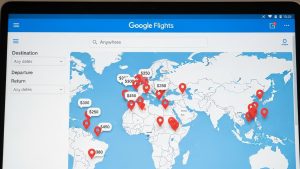
If you ask a flight search engine, “I want to go to Paris on July 14th,” you are at the mercy of the airline. They know you need that specific route, so the price is high. To win, you must be flexible. This is where the Google Flights “Anywhere” feature shines.
The Strategy:
-
Go to Google Flights.
-
Enter your home airport.
-
Leave the destination blank (or select “Anywhere”).
-
Select “Flexible Dates” (e.g., a 1-week trip in the next 6 months).
Suddenly, you aren’t searching for a flight to Paris. You are searching for the cheapest door to Europe. Maybe flying into Brussels is $400 cheaper than Paris. Since Brussels is only a 90-minute train ride away, you save a fortune. This method creates a map of opportunity.
3. Mistake Fares: The Holy Grail of Travel
A “Mistake Fare” happens when an airline or online travel agency (OTA) accidentally lists a ticket for the wrong price. This can happen due to currency conversion errors, human error (the “fat finger” problem), or technical glitches. These fares can be up to 90% off. I’m talking about $180 roundtrip to Japan or $400 business class to Dubai.
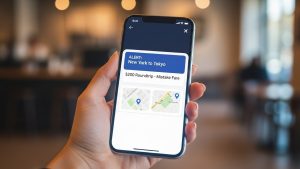
How to find them: You cannot find these by searching manually. They disappear in hours. You need alerts. Services like Going (formerly Scott’s Cheap Flights), Secret Flying, and Jack’s Flight Club employ teams of humans and bots to scan for these anomalies 24/7.
-
The Rule: If you see a mistake fare, book immediately. Think later. You usually have 24 hours to cancel for free (in the US), so lock in the price first.
-
The Caution: Do not book non-refundable hotels immediately. Wait a few days to ensure the airline honors the ticket (they usually do, but occasionally they cancel and refund).
4. The VPN Hack: Changing Your “Point of Sale”
Airlines often charge different prices depending on where the ticket is bought. This is called “Regional Pricing.” A ticket from Lima to Cusco bought in the US might cost $150. That same ticket bought on the airline’s Peruvian website might cost $50.
How to use a VPN: If you are booking a domestic flight in another country (e.g., Thailand, Colombia, India), turn on your VPN and set your location to that country.
-
Connect to a server in the destination country.
-
Use Google Translate to navigate the local version of the airline’s site.
-
Pay in the local currency.
I saved $80 on a flight in Argentina simply by pretending I was in Buenos Aires instead of New York. It doesn’t work for every international flight, but for domestic hops abroad, it is a goldmine.

5. Skiplagging: The Controversial “Hidden City” Trick
This is the hack airlines hate. In fact, United Airlines once sued the founder of Skiplagged (and lost). Here is the logic: Direct flights are often more expensive than flights with layovers. Sometimes, a flight from New York to San Francisco (with a layover in Dallas) is cheaper than a direct flight from New York to Dallas.
The Strategy: You book the flight to San Francisco, but you get off the plane in Dallas (the layover city) and simply leave the airport. You “skip” the second leg.
The Risks (Read Carefully):
-
No Checked Bags: Your bags will go to the final destination (San Francisco). You can only use this trick with a carry-on (backpack).
-
One-Way Only: If you miss a leg of your flight, the airline automatically cancels the rest of your itinerary. You cannot book a roundtrip ticket if you plan to skiplag the outbound journey.
-
Don’t Do It Often: If you do this every week on the same airline, they might ban your frequent flyer account. Use it sparingly for massive savings.
6. The Goldilocks Window: When to Book
Is it better to book 6 months early or wait for a last-minute deal? Data from Expedia suggests there is a “Goldilocks Window”—not too early, not too late.
-
Domestic Flights: The sweet spot is usually 28 to 35 days before departure.
-
International Flights: You want to book 3 to 4 months in advance.
Booking too early (11 months out) is expensive because airlines set a conservative, high baseline price. Booking last minute (under 14 days) is expensive because airlines know business travelers will pay anything to get to a meeting.
7. Budget Airlines vs. Legacy Carriers
Don’t ignore the budget carriers (Ryanair, Spirit, AirAsia). Yes, the legroom is tight, and they charge you for water. But for a 2-hour flight, does it matter? However, be careful with the “unbundling” math. A $50 flight on Spirit might become a $150 flight once you pay for a carry-on bag and seat selection. Always compare the final checkout price, not the initial search price. Sometimes, the “expensive” Delta flight is actually cheaper because it includes a bag.
Frequently Asked Questions (FAQs)
Q: Is it cheaper to book flights on a Tuesday? A: This is an outdated rule from the 1990s when travel agents updated fares manually once a week. Today, algorithms update prices every second. Cheap flights can appear at 3 AM on a Saturday or 2 PM on a Thursday.
Q: Does clearing my cookies help? A: As mentioned in the Incognito section, likely not. But if it gives you peace of mind, go ahead. It takes 5 seconds and won’t hurt.
Q: What is the best search engine? A: I recommend a combination. Start with Google Flights for the calendar view and speed. Then check Skyscanner or Momondo to see if smaller online travel agencies (OTAs) have a better price than the airline directly.
Conclusion
Mastering how to find cheap flights to anywhere is a skill that pays for itself immediately. It requires a shift in mindset: prioritize flexibility over rigid planning, embrace the layover, and use technology to spy on price drops. The world is surprisingly affordable if you know which digital doors to unlock. So, clear your schedule, set your alerts, and get ready to pack your bags. The next mistake fare is just around the corner.