DIY Natural Cleaning Products: How to Clean Your Home Without Toxic Chemicals
Introduction
Switching to DIY natural cleaning products usually happens after a headache. I remember scrubbing my shower grout with a popular brand of bleach cleaner. The fumes were so strong I had to open a window and turn on the fan, yet I still felt dizzy. I looked at the bottle, which was covered in skull-and-crossbones warnings and phone numbers for poison control. It hit me: Why am I cleaning the place where I wash my body with poison?
We have been marketed a lie that “clean” smells like fake pine needles and lemon bleach. In reality, clean should smell like nothing. Or, at best, like actual lemons. According to the American Lung Association, many commercial cleaning products contain Volatile Organic Compounds (VOCs) that can contribute to chronic respiratory problems, allergic reactions, and headaches.
In this comprehensive 1200-word deep dive, I will teach you the chemistry of “Green Cleaning.” We will master the Holy Trinity (Vinegar, Baking Soda, Castile Soap), learn what never to mix, and create effective DIY natural cleaning products that cost pennies compared to the store-bought versions.
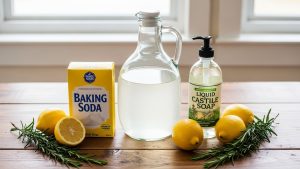
1. The Holy Trinity: Your New Toolkit
You don’t need 15 different bottles under your sink. You really only need three core ingredients. This isn’t just folk wisdom; it’s basic chemistry.
-
White Vinegar (The Acid): Acidity cuts through grease, mineral deposits (lime scale), and soap scum. It creates an environment where most bacteria cannot thrive.
-
Baking Soda (The Base): Sodium Bicarbonate is abrasive (good for scrubbing) and alkaline. It neutralizes odors rather than masking them.
-
Castile Soap (The Surfactant): A plant-based soap (traditionally made from olive oil) that grabs onto dirt and water, washing it away. Dr. Bronner’s is the most famous brand.
2. Recipe 1: The All-Purpose Cleaner (Better Than Windex)
This is the workhorse of the home. You can use it on counters, windows, mirrors, and toilets. Commercial glass cleaners often contain ammonia, which irritates the lungs. This recipe uses alcohol for a streak-free shine.
The Formula:
-
1 cup Water (Distilled is best to avoid streaks).
-
1 cup White Vinegar.
-
1 tablespoon Rubbing Alcohol (Isopoly alcohol) – This helps it evaporate quickly for no streaks.
-
15 drops Essential Oil (Lemon or Tea Tree for antimicrobial properties).
Instructions: Mix everything in a glass spray bottle. Shake before use. Note: Do not use vinegar on natural stone (Granite or Marble). The acid can etch the surface over time. For stone, substitute vinegar with rubbing alcohol or just soapy water.
3. Recipe 2: The “Soft Scrub” (For Bathtubs and Sinks)
Vinegar spray won’t remove baked-on grime in the tub. You need abrasion. Commercial “Soft Scrub” products contain microplastics and harsh whiteners. Here is the natural alternative that works instantly.
The Formula:
-
1/2 cup Baking Soda.
-
1/4 cup Liquid Castile Soap.
-
1 tablespoon Hydrogen Peroxide (optional, for whitening).
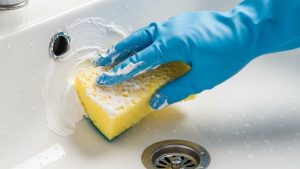
Instructions: Mix it into a paste. It should look like frosting. Scoop it onto a sponge and scrub your bathtub rings or stainless steel sink. The baking soda acts as a gentle sandpaper, removing the dirt without scratching the finish. The soap lifts the grease. It is oddly satisfying to use.
4. Safety Warning: Chemistry Gone Wrong
Just because it is “natural” doesn’t mean it is safe to mix blindly. There are two combinations you must avoid when making DIY natural cleaning products.
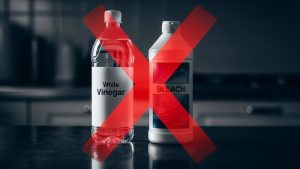
Danger 1: Vinegar + Bleach Never mix these. It creates Chlorine Gas, which was used as a chemical weapon in WWI. It causes severe lung damage. If you are switching to natural products, get rid of the bleach entirely so you don’t make a mistake.
Danger 2: Vinegar + Castile Soap This won’t kill you, but it is useless. Vinegar is an acid. Soap is a base. If you mix them in the same bottle, they neutralize each other. The acid “unsaponifies” the soap, turning it back into oil. You end up with a curdy, oily white mess that cleans nothing. Rule: Use them separately. Clean with soap first to remove dirt, rinse, then spray with vinegar to remove residue.
5. Recipe 3: The Wood Polish (Feed the Wood)
Commercial wood polishes often contain silicone oils and artificial scents that create a fake shine but can dry out wood over time. You can nourish your wooden tables with pantry staples.
The Formula:
-
3 parts Olive Oil (feeds the wood).
-
1 part Lemon Juice (cleans the wood).
Instructions: Mix in a small jar. Dip a soft cloth into it and rub it into the grain of the wood. The lemon juice dissolves dust and fingerprints, while the olive oil moisturizes the timber. Wipe off any excess so it doesn’t get sticky.
6. Storage and Aesthetics: The “Pinterest” Factor
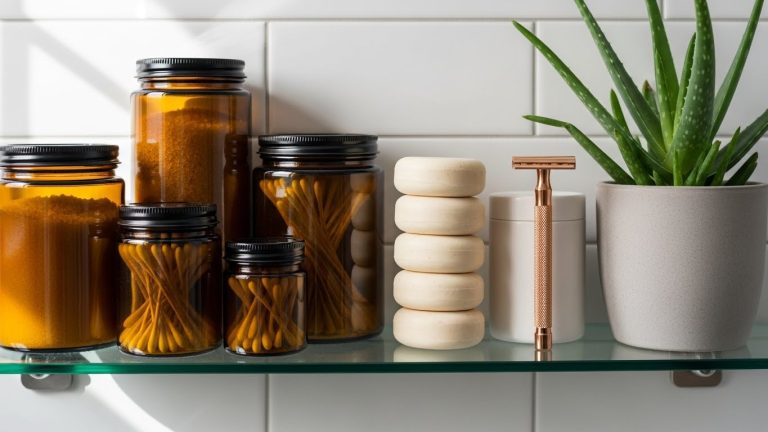
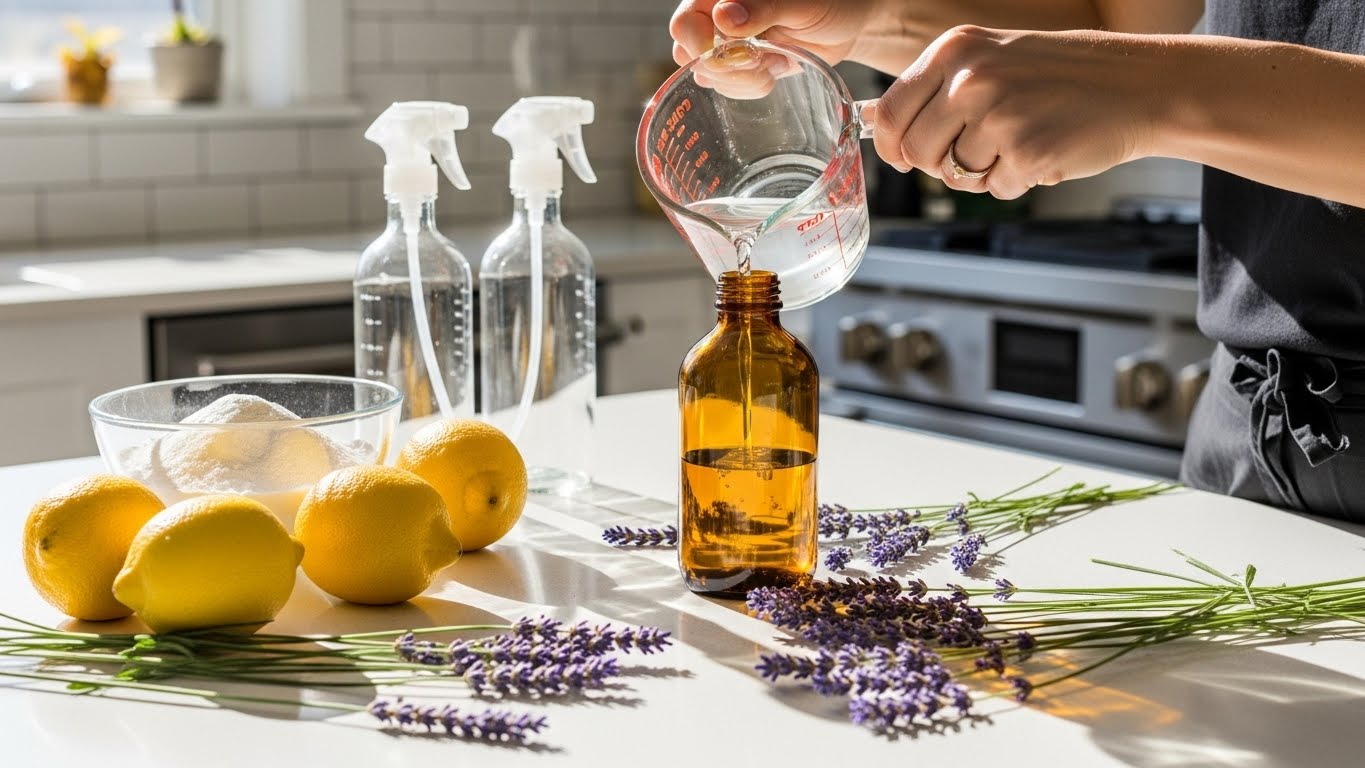
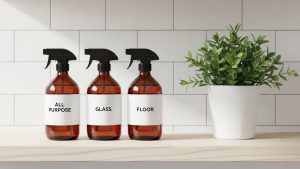
One reason people love store-bought products is the packaging. To make your habit stick, invest in Amber Glass Spray Bottles.
-
Why Amber? Essential oils can degrade in plastic or sunlight. Amber glass protects them.
-
Labels: Use a label maker or chalkboard stickers. When your cleaning kit looks beautiful, you are more likely to use it. It transforms a chore into a ritual.
7. Does It Disinfect? (The Scientific Nuance)
This is important. Cleaning removes dirt and germs (physically washing them away). Disinfecting kills germs chemically.
Vinegar kills some bacteria (like E. coli and Salmonella) but it is not registered as a hospital-grade disinfectant by the EPA. It is not effective against viruses like the Flu or COVID-19. For daily cleaning, vinegar is perfect. If someone in your house is sick with the flu, this is the one time you should reach for a stronger disinfectant (like 70% alcohol or Hydrogen Peroxide) rather than just vinegar.
Frequently Asked Questions (FAQs)
Q: Will my house smell like a pickle factory? A: Only for about 10 minutes. The smell of vinegar evaporates completely as it dries. If you infuse it with lemon peels or essential oils, the lingering scent will be citrus, not vinegar.
Q: Is Castile soap safe for pets? A: Yes, plain Castile soap is safe. However, be very careful with Essential Oils. Tea Tree and Peppermint oils can be toxic to cats and dogs if ingested or applied to skin. Stick to Lemon or Lavender, or keep the oils out entirely if you have sensitive pets.
Q: Can I use lemon juice instead of vinegar? A: Yes, for cleaning power, but lemon juice is perishable. If you leave it in a bottle on the shelf for weeks, it will mold. Vinegar preserves itself indefinitely.
Q: Is baking soda safe for aluminum? A: No. Baking soda can cause aluminum pots and pans to oxidize (turn black) if left too long. Use it quickly and rinse well.
Conclusion
Transitioning to DIY natural cleaning products is one of the most empowering steps you can take for your home. You save money, you reduce plastic waste (by reusing glass bottles), and you eliminate the cloud of toxic VOCs from your indoor air. Once you see how sparkling your windows get with just water, vinegar, and rubbing alcohol, you will wonder why you ever paid $5 for a blue liquid that smells like fake ammonia.