How to Survive Long-Haul Flights in Economy: A 14-Hour Survival Guide
Introduction
Searching for how to survive long-haul flights in economy usually happens about two days before you board a 14-hour flight to Europe or Asia. You look at your ticket, see “Seat 34E” (the dreaded middle seat), and a wave of panic sets in. I have been there. My first trans-pacific flight was a nightmare of swollen ankles, crying babies, and a stiff neck that lasted for three days. I vowed never to do it again without a plan.
We often treat the flight as just “getting there,” but for your body, it is a physiological marathon. You are trapped in a metal tube with 10% humidity (drier than the Sahara Desert), pressurized to 8,000 feet, and forced to sit in a chair designed by someone who hates the human spine. However, with the right strategy, you can step off the plane feeling refreshed rather than wrecked.
In this comprehensive 1200-word deep dive, I will share the science of “Jet Bloat,” why you need compression socks immediately, and the exact gear and routine on how to survive long-haul flights in economy like a pro.
1. The Seat Selection Strategy: Not All Economy Seats Are Equal
Before you even pack, you need to secure your territory. Most people pick seats randomly. This is a mistake. Use a tool like SeatGuru to look up your specific aircraft map.
-
The “Exit Row” Trap: Yes, you get legroom, but the seats often don’t recline, and the armrests are fixed (making the seat narrower).
-
The “Bulkhead” (Front Row): Great for knees, but you have no storage under the seat in front of you, and this is where the baby bassinets are located. Expect noise.
-
The Back of the Plane: It is bumpy and noisy near the toilets, but if the flight isn’t full, this is where you are most likely to find an empty row to lie down across.
2. The Health Kit: DVT and Hydration
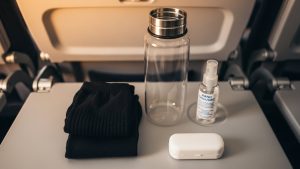
The biggest danger on a long flight isn’t turbulence; it’s Deep Vein Thrombosis (DVT). When you sit for hours, blood pools in your legs. This can form a clot that travels to your lungs. The Non-Negotiable Item: Compression Socks. Put them on before you board. They squeeze your calves, forcing blood back up to your heart. According to the Centers for Disease Control and Prevention (CDC), wearing compression stockings significantly reduces the risk of clots during travel.
Hydration Strategy: Airplane cabins have extremely low humidity. This dehydrates your skin and sinuses, making you susceptible to viruses.
-
Rule: Drink 8oz of water for every hour of flight.
-
Avoid: Alcohol and coffee. They are diuretics (make you pee) and dehydrate you faster.
3. The Sleep System: Tricks for Upright Napping
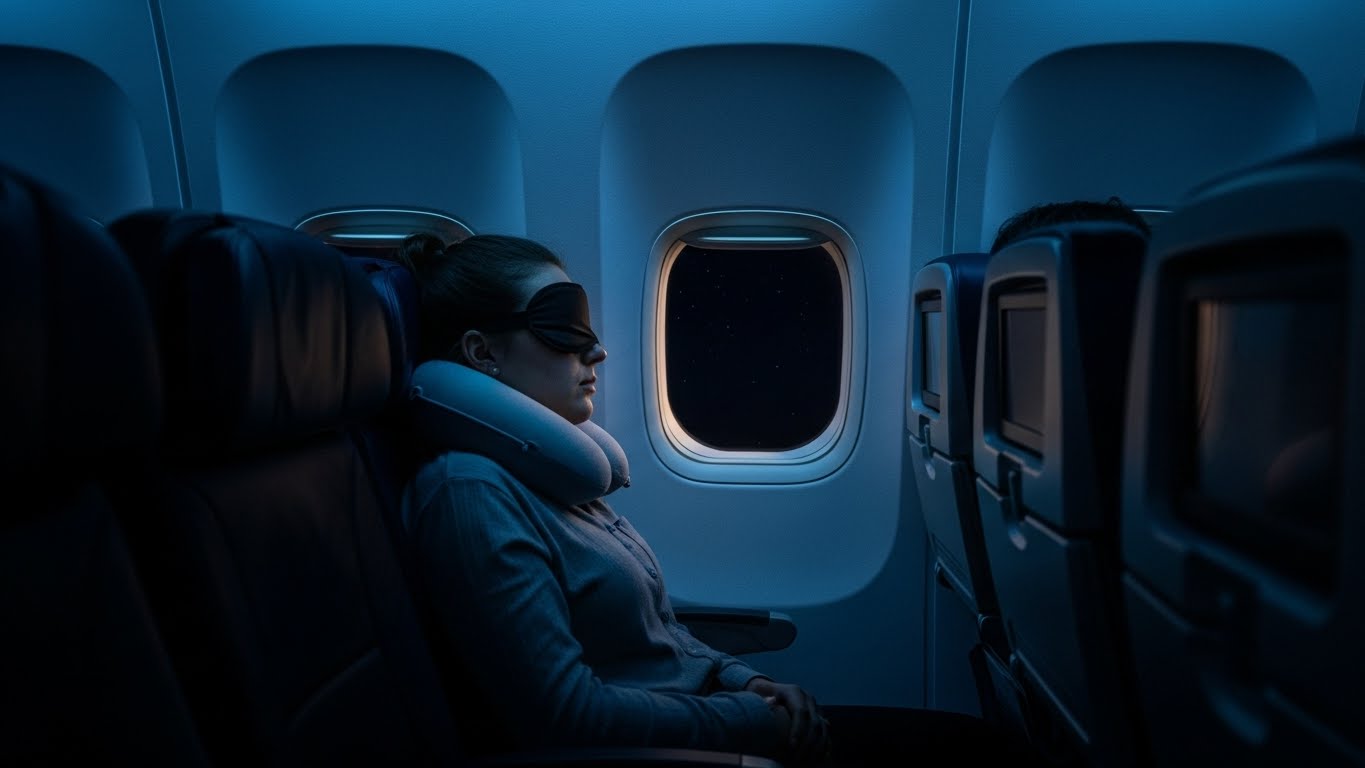
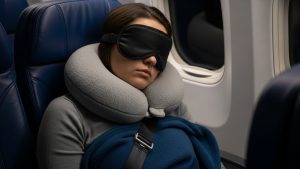
Sleeping in Economy is an art form. The standard U-shaped neck pillow is actually terrible for most people because it pushes your head forward. The Better Pillow: Look for a wrap-around scarf style (like the TRTL pillow) or a memory foam one with a flat back. The Eye Mask: You cannot control the cabin lights. A contoured eye mask (that doesn’t smash your eyelashes) signals your brain that it is night time.
The “Do Not Disturb” Hack: If you want to sleep but are afraid of missing the meal service, buckle your seatbelt over your blanket. Flight attendants won’t wake you up to check if you are buckled in during turbulence.
4. The Food Situation: Combating “Jet Bloat”
Why do you feel so bloated on planes? Gas expands at high altitudes. The gas in your stomach expands by about 30% when the cabin is pressurized. If you eat a heavy, salty meal (like the pasta they serve), you will feel like a balloon. The Strategy:
-
Bring Your Own Food: Pack low-sodium snacks like unsalted nuts, protein bars, or fruit.
-
Skip the Carbonation: Drinking soda or sparkling water is asking for a stomach ache.
-
Fast? Some travelers swear by fasting during the flight to eliminate jet lag. I prefer eating light.
5. In-Flight Entertainment: Analog vs. Digital
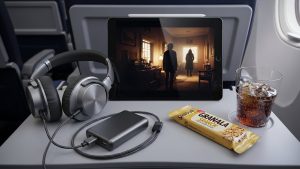
Do not rely on the seat-back screen. It might be broken, or the selection might be terrible. Download everything onto your tablet or phone beforehand. The Audio Advantage: Looking at a screen for 14 hours causes eye strain and interferes with melatonin. Switch to Audiobooks or Podcasts. Closing your eyes and listening allows you to rest even if you can’t sleep. Noise Cancellation: Invest in high-quality Noise Canceling Headphones (Sony or Bose). The constant “hum” of the engine creates low-level stress (fatigue) for your brain. Blocking it out is an instant relief.
6. Hygiene: The Mid-Flight Refresh
At hour 7, you will feel gross. A quick hygiene routine resets your mental state. Pack a small “Refresh Kit” in your carry-on (not in the overhead bin).
-
Face Wipes: Wipe off the grime.
-
Toothbrush/Paste: Brushing your teeth is the single most refreshing thing you can do.
-
Deodorant: For everyone’s sake.
-
Moisturizer: Apply heavily. Your skin is thirsting for it.
7. Movement: The “Bathroom Yoga”
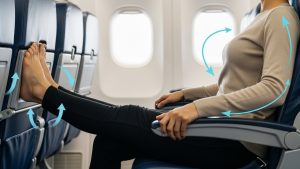
You must move. Every 2 hours, get up. Walk the aisle. While waiting for the bathroom, do calf raises and stretches. Seated Yoga:
-
Ankle Circles: Rotate your feet.
-
Neck Rolls: Gently stretch your neck.
-
Spinal Twist: Grab the armrest and gently twist your torso.
Frequently Asked Questions (FAQs)
Q: Should I take sleeping pills? A: Be careful. Prescription meds (like Ambien) can knock you out too hard. If there is an emergency, you need to be alert. Also, they can increase the risk of DVT because you don’t move at all. Melatonin or Magnesium is a safer, gentler choice.
Q: Can I take my shoes off? A: Yes, but keep your socks on. Going barefoot is rude and unhygienic (the carpet is dirty). Wear breathable slip-on shoes for security and comfort.
Q: How do I handle jet lag? A: Start shifting your schedule before you leave. Once on the plane, set your watch to the destination time immediately. If it is day time there, try to stay awake. If it is night, try to sleep.
Q: What if I get the middle seat? A: Claim the armrests immediately. Etiquette says the middle seat gets both armrests. Create a cocoon. Put on your headphones and eye mask and retreat into your own world.
Conclusion
Mastering how to survive long-haul flights in economy is about preparation and mindset. It is accepting that it won’t be a 5-star hotel experience, but making it a 5-star economy experience. By hydrating aggressively, protecting your sleep, and moving your body, you turn a painful ordeal into a manageable journey. When you land, you won’t be a zombie; you’ll be ready to explore.