
Energy Efficient Home Upgrades on a Budget: Slash Your Bills Without Solar Panels
Introduction
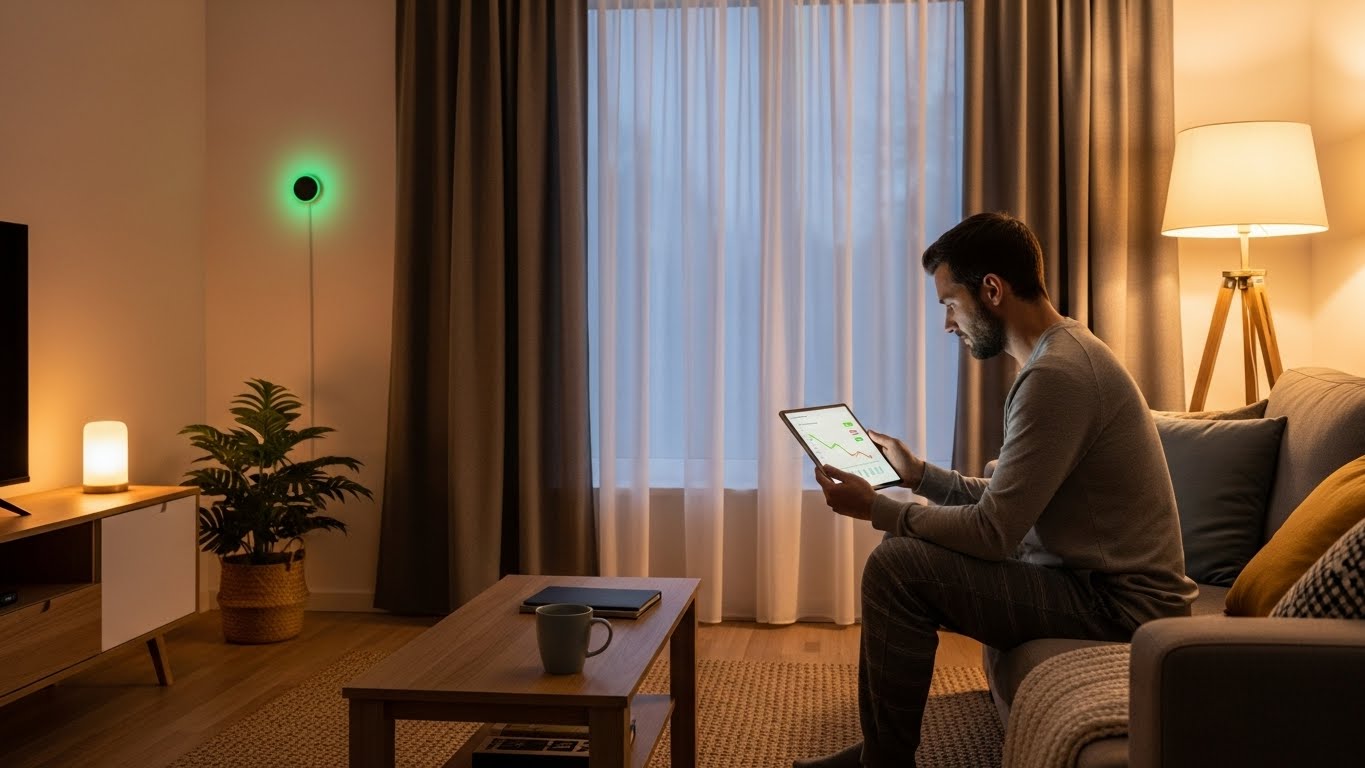
Implementing energy efficient home upgrades usually becomes a priority the moment you open your electric bill in the middle of winter and your jaw hits the floor. I remember that feeling vividly. Three years ago, I moved into a drafty rental house built in the 1970s. My first winter heating bill was over $400. I stared at the paper, feeling like I was being robbed. I wasn’t running a factory; I was just trying to keep my toes from freezing.
I assumed the only solution was to install expensive solar panels or replace all the windows—things I couldn’t afford and wasn’t allowed to do as a renter. But I was wrong. I spent the next month obsessed with “building science.” I learned that a house is a system, and most houses are leaking money through invisible holes. By making small, strategic changes, I cut that bill in half.
In this comprehensive 1200-word deep dive, I will expose the hidden energy thieves in your home (Vampire Power), teach you how to perform a professional-grade “Candle Test,” and guide you through the best energy efficient home upgrades that cost less than a dinner out but save you hundreds a year.
1. The Silent Thief: Combating “Vampire Power”
You think your TV is off because the screen is black. You are wrong. Most modern appliances never truly turn off; they enter “Standby Mode.” They are waiting for a signal from your remote, checking for software updates, or powering that tiny red LED light. This is called Vampire Power (or Phantom Load).
According to the U.S. Department of Energy, standby power accounts for 5% to 10% of residential energy use. That is literally money you are paying for devices to do nothing.
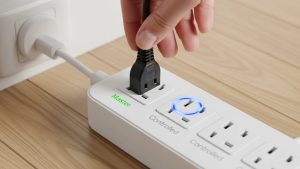
The Fix: Smart Power Strips Don’t just unplug things manually (you will forget). Buy a Smart Power Strip. These strips have a “Control Outlet” and “Switched Outlets.”
-
How it works: You plug your TV into the Control Outlet. You plug your DVD player, Soundbar, and Game Console into the Switched Outlets. When you turn off the TV, the strip senses the drop in current and automatically cuts power to everything else. It kills the vampires for you.
2. The Envelope: Sealing the Leaks (The Candle Test)
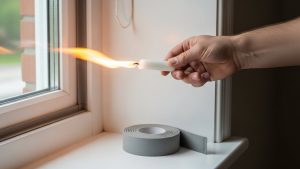
Your heating and cooling system is the biggest energy user in your home. If your house has air leaks, you are essentially paying to heat the neighborhood. You don’t need a $500 professional energy audit to find leaks. You need a candle.
The Candle Test Protocol:
-
Turn off all fans and close all windows.
-
Light a candle (or an incense stick).
-
Walk slowly around the perimeter of your house. Hold the flame near window frames, door jams, and electrical outlets.
-
The Result: If the smoke blows sideways or the flame flickers wildly, you have a leak.
The Fix: Weatherstripping For less than $10, you can buy a roll of adhesive foam or V-strip weatherstripping. Clean the frame, cut the strip to size, and stick it on. It creates an airtight seal when the window closes. According to the Environmental Protection Agency (EPA), sealing air leaks can save up to 15% on heating and cooling costs.
3. Lighting: The LED Revolution (Lumens vs. Watts)
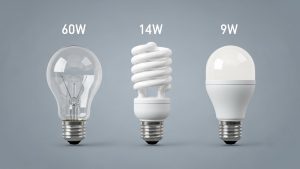
If you still have any incandescent bulbs (the hot ones) or CFLs (the curly ones), throw them away. LEDs use 75% less energy and last 25 times longer. But people hate them because they buy the wrong color. They buy “Daylight” (5000K) bulbs and then complain their living room looks like a hospital.
Understanding Kelvin (K):
-
2700K (Warm White): This mimics the old incandescent glow. Cozy and yellow. Use in living rooms and bedrooms.
-
3000K (Soft White): Slightly crisper. Good for bathrooms.
-
5000K (Daylight): Very blue and harsh. Use only in garages or for task lighting.
Replacing your 5 most-used bulbs with LEDs can save you $75 a year. It is the highest ROI (Return on Investment) of any upgrade.
4. Windows: The Thermal Curtain Hack
Windows are basically holes in your wall. Even double-paned windows lose heat faster than an insulated wall. If you can’t replace the windows, you must dress them.
Thermal Curtains: These are heavy drapes with a thick, white foam backing.
-
Winter: They trap the cold air between the glass and the curtain, preventing it from entering the room.
-
Summer: They reflect the sunlight back out, keeping the room cool (The Greenhouse Effect).
I installed thermal curtains in my bedroom and the temperature difference was 5 degrees immediately. It meant my heater didn’t have to run all night.
5. Water Heating: The Cold Wash Challenge
Your water heater is the second largest energy user. And 90% of the energy used by your washing machine goes solely to heating the water. The Swap: Switch to Cold Water Wash. Modern detergents rely on enzymes, not heat, to clean clothes. In fact, cold water is better for your clothes—it prevents shrinking and fading. According to the Cold Water Saves initiative, if every US household switched to cold water for one year, the energy saved could power the Empire State Building for 100 years.
6. The Smart Thermostat: Brains Over Brawn
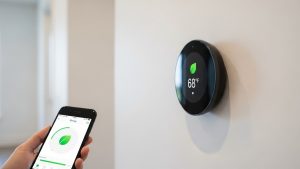
Human beings are terrible at manual climate control. We turn the heat up too high, forget to turn it down when we leave for work, and then heat an empty house for 9 hours. A Smart Thermostat (like Nest or Ecobee) solves this. It uses motion sensors and geofencing (tracking your phone) to know when you are away. It automatically turns into “Eco Mode” when the house is empty.
The Payoff: Studies show smart thermostats save about 10-12% on heating bills. Since the average heating bill is huge, the device usually pays for itself in less than two years.
7. Dishwasher Tetris: Air Dry vs. Heat Dry
Your dishwasher is actually more efficient than hand washing (which wastes gallons of water running the tap). But the “Heat Dry” cycle is an energy hog. It uses a massive heating element to bake your dishes dry. The Hack: Turn off “Heat Dry.” When the cycle finishes, open the dishwasher door just a crack. The steam will escape, and the residual heat from the hot water will flash-dry the dishes in 10 minutes. Free drying.
Frequently Asked Questions (FAQs)
Q: Do unplugged chargers really use power? A: Yes, if the charger is warm to the touch, it is using power. However, modern phone chargers use very little. The big offenders are gaming consoles, TVs, and desktop computers.
Q: Is it better to leave the light on or turn it off and on? A: With LEDs, always turn it off. The “surge” to turn it on is negligible. The myth that it takes more power to start it up applies to huge industrial fluorescent tubes, not home bulbs.
Q: Does painting the roof white help? A: Yes, “Cool Roofs” reflect sunlight and lower attic temperatures. But for a budget renter upgrade, sticking reflective film on windows is a cheaper alternative.
Q: What is an energy audit? A: A professional inspection where they use blower doors and infrared cameras to find leaks. Many utility companies offer a basic version of this for free. Check your provider’s website.
Conclusion
Prioritizing energy efficient home upgrades is not just about being “green”; it is about being smart with your resources. It turns your home from a wasteful structure into a finely tuned machine. By hunting down vampire power, sealing your air leaks, and choosing the right light bulbs, you stop throwing money out the window. You gain comfort, you gain control, and most importantly, you gain the satisfaction of outsmarting the electric company.