The Digital Nomad Guide for Beginners: How to Travel the World While Working
Introduction
If you are reading this digital nomad guide for beginners, you have probably seen the photos on Instagram: a tanned influencer sitting in a hammock on a beach in Bali, holding a coconut in one hand and typing on a laptop with the other. It looks like paradise. It looks like the ultimate dream.
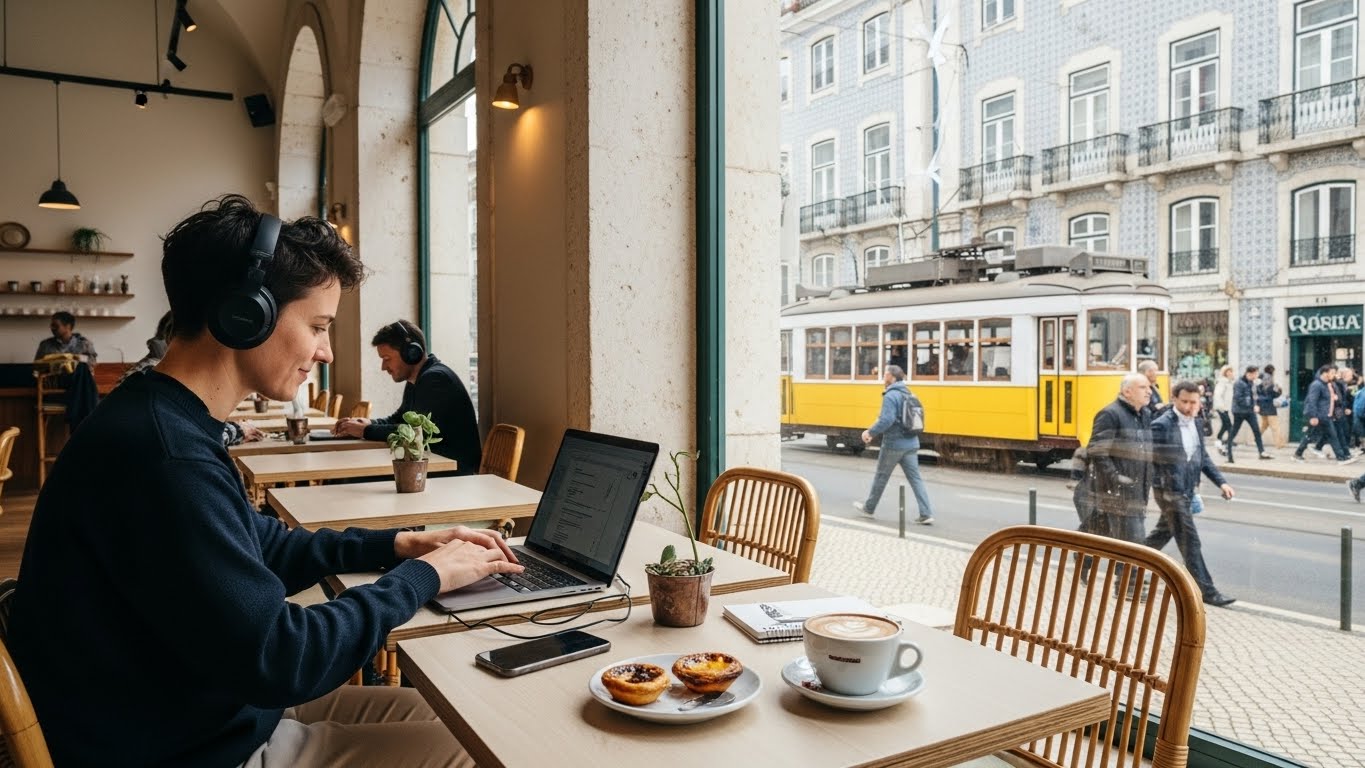
I am here to tell you that photo is a lie. If you try to work from a hammock, your back will hurt within 20 minutes. If you try to work on a beach, the sun glare will make your screen unreadable, and sand will destroy your keyboard. Real digital nomad life isn’t about working from the beach; it’s about finding a cafe with decent ergonomics and stable WiFi at 2 AM because you have a Zoom call with a client in a different time zone.
It is challenging, messy, and exhausting. But it is also the most liberating lifestyle imaginable. In this comprehensive 1200-word deep dive, I will strip away the filters and give you the practical, unglamorous blueprint on how to become a digital nomad, covering everything from tax residency to the essential gear you actually need.
1. The “Remote” Reality: Finding the Job First
You cannot be a digital nomad without the “digital” part. Many people sell their stuff and buy a ticket before they have a stable income. This is a recipe for disaster. You need a remote-first income stream.
The Three Paths:
-
Remote Employee: You work for a company (9-to-5), but they allow you to work from anywhere. This provides stability but limits flexibility (you might have to work USA hours while in Thailand).
-
Freelancer: You trade time for money (copywriting, graphic design, coding). You are your own boss, but income fluctuates.
-
Entrepreneur: You sell a product or run an agency. High risk, high reward.
Before you book a flight, negotiate with your current employer or secure at least three reliable freelance clients. You need a “Runway Fund” of at least 6 months’ living expenses in case you lose your job while abroad.
2. The Tech Stack: Your Office in a Backpack
Your laptop is your livelihood. If it breaks, you are unemployed. When packing, prioritize reliability over minimalism.
The Essentials:
-
Laptop Stand: Looking down at a screen for 8 hours will destroy your neck. A foldable stand (like the Roost Stand) elevates the screen to eye level.
-
External Keyboard & Mouse: Essential if you use a stand.
-
Noise-Canceling Headphones: Non-negotiable. You will inevitably end up working in a noisy cafe or a coworking space with a loud talker next to you.
-
Universal Power Adapter: Get one with multiple USB-C ports so you can charge your phone and laptop simultaneously from one outlet.
-
Power Bank: A massive one (20,000mAh) capable of charging your laptop. This saves you when the power goes out or you can’t find a seat near an outlet.

3. The WiFi Anxiety: How to Stay Connected
“Does the Airbnb have good WiFi?” is the question that will haunt your dreams. Hosts often lie. They say “High Speed,” but they mean “High Speed for checking email in 2010,” not for 4K video editing.
The Strategy:
-
Ask for a Speed Test: Before booking an Airbnb, ask the host to send you a screenshot of a speed test (using Speedtest.net). If they refuse, don’t book.
-
The Backup Plan (Hotspot): Never rely on one source of internet. Always buy a local SIM card with unlimited data immediately upon arrival.
-
eSIMs: Services like Airalo allow you to download a data plan instantly without swapping physical cards. It is slightly more expensive but invaluable for instant connectivity when you land.
4. The 90-Day Rule: Understanding Visas
You cannot just show up in Europe and stay forever. Most of Europe falls under the Schengen Zone.
-
The Rule: You can stay for 90 days within any 180-day period. After 90 days, you must leave the entire Schengen Zone (not just the country) for another 90 days.
Digital Nomad Visas: Thankfully, countries are realizing the economic value of remote workers. According to Nomad List, over 50 countries now offer specific “Digital Nomad Visas” (including Portugal, Spain, and Costa Rica) that allow you to stay for 1-2 years tax-efficiently. Always research the visa requirements before booking a one-way ticket.
5. Accommodation: Airbnb vs. Coliving
Where you sleep determines your social life.
-
Airbnb: Great for privacy, terrible for loneliness. You are alone in an apartment. Unless you make an effort to go to meetups, you won’t speak to anyone for days.
-
Coliving Spaces: Companies like Selina or Outsite offer rooms in a building dedicated to remote workers. You get a guaranteed workspace, fast WiFi, and a built-in community of like-minded people.
-
The Cost: Coliving is usually more expensive than a standard apartment, but you are paying for the community and the reliable infrastructure.
For your first trip, I highly recommend a Coliving space. It cures the “Day 1 Loneliness” instantly.
 digital nomad guide for beginners
6. The “Hidden” Logistics: Banking and Insurance
Using your home bank account abroad is a rookie mistake. Foreign transaction fees (usually 3%) add up to hundreds of dollars a month.
Banking:
-
Open a borderless account like Wise (formerly TransferWise) or Revolut.
-
They allow you to hold money in multiple currencies and spend at the real exchange rate with low fees.
-
Always choose to pay in the “Local Currency” on the card machine. Never let the machine convert it for you (Dynamic Currency Conversion is a scam).
Insurance: Your domestic health insurance likely stops working at the border. You need Nomad Insurance (like SafetyWing or World Nomads). This covers medical emergencies and often travel mishaps like lost luggage. Do not travel without it. One scooter accident in Bali could cost you $50,000 without insurance.
7. Loneliness: The Dark Side of the Lifestyle
This is the part nobody talks about. Traveling alone is lonely. You arrive in a new city, and you know nobody. By the time you make friends, one of you has to leave. It is a revolving door of relationships. How to Cope:
-
Slow Travel: Don’t change cities every week. Stay in one place for at least a month. This gives you time to build a routine and real friendships.
-
Coworking: Even if you can work from home, go to a coworking space. Human connection is essential for mental health.
Frequently Asked Questions (FAQs)
Q: Do I have to pay taxes? A: Yes. Just because you leave the country doesn’t mean you leave the tax system (especially if you are American). Most nomads are considered tax residents of their home country until they establish residency elsewhere. Consult a tax professional.
Q: How do you handle time zones? A: It requires sacrifice. If your clients are in New York and you are in Bali, you will be working from 8 PM to 4 AM. Choose your destination based on your work hours, or find clients who work asynchronously.
Q: Is it safe? A: Generally, yes. But you are walking around with $3,000 worth of electronics in your bag. Always lock your laptop. Never leave your bag unattended in a cafe. Use a VPN to protect your data on public WiFi.
Q: How much money do I need to start? A: I recommend having at least $5,000 – $10,000 in savings before leaving. This covers your first month’s rent, flights, gear, and an emergency fund.
Conclusion
Following a digital nomad guide for beginners isn’t about running away from reality; it is about redesigning it. It allows you to trade your commute for a walk in a foreign city and your cubicle for a cafe with a view. It is not always easy—the WiFi will fail, you will get lonely, and you will miss your own bed. But the personal growth you gain from navigating the world on your own terms is worth every struggle. Pack your laptop, book that ticket, and go find your office.