
The Ultimate Homemade Dog Food Guide: Recipes, Risks, and Ratios
Introduction
Creating a balanced diet using a homemade dog food guide is often sparked by a terrifying news headline about a commercial kibble recall. I remember the moment clearly: I was pouring dry brown pellets into my Golden Retriever’s bowl when I read a notification about a popular brand being recalled due to salmonella contamination. I looked at the bowl, then at my dog, and felt a pit in my stomach. I realized I had no idea what was actually in those pellets.
So, I did what many loving owners do—I switched to cooking for him. I boiled chicken, steamed rice, and chopped carrots. He loved it. But three months later, his coat lost its shine, and he seemed lethargic. I took him to the vet, and she gave me a harsh reality check: “You are slowly starving him of calcium.” I learned the hard way that dogs are not just “small humans.” They have complex nutritional needs that chicken and rice alone cannot meet.
In this comprehensive 1200-word deep dive, I will share the vetted protocols for cooking for your pet. We will cover the crucial “Calcium-to-Phosphorus Ratio,” the danger of “all-meat” diets, and a step-by-step homemade dog food guide to ensure your pup thrives, not just survives.
1. The “All Meat” Myth: Why Protein Isn’t Enough
The biggest mistake beginners make is thinking, “Dogs are wolves, so they should just eat meat.” While dogs are descendants of wolves, thousands of years of domestication have adapted their digestive systems. More importantly, even wolves don’t just eat muscle meat. They eat the bones (calcium), the organs (vitamins), and the stomach contents of their prey (vegetables/grains).
If you feed your dog only muscle meat (chicken breast, ground beef), you are providing plenty of Phosphorus but almost zero Calcium. The Science: A dog needs a Calcium:Phosphorus ratio of roughly 1:1 to 1.2:1. If this ratio is off, the dog’s body will pull calcium out of its own bones to balance the blood levels, leading to skeletal problems and fractures. This is why following a balanced homemade dog food guide involves much more than just shopping at the butcher.
2. The Golden Ratio: 40-50-10
While every dog is different (consult your vet!), a generally accepted starting point for a homemade diet is the 40-50-10 Rule.
-
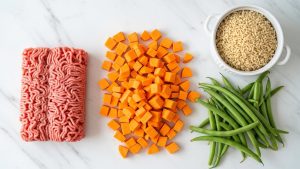
40% Protein: Lean ground beef, turkey, chicken, or fish. (Muscle meat).
-
50% Vegetables/Carbohydrates: Sweet potatoes, carrots, green beans, brown rice, or oatmeal. (Fiber and energy).
-
10% Fats/Supplements: Fish oil, calcium supplements, organ meats (liver/kidney).
Preparation Note: Always cook the ingredients. While “Raw Feeding” is a trend, cooking eliminates the risk of bacteria like E. coli and Listeria, which is safer for both the dog and the humans handling the food. According to the American Veterinary Medical Association (AVMA), cooking provides the safest nutritional uptake.
3. The Calcium Solution: Eggshells to the Rescue
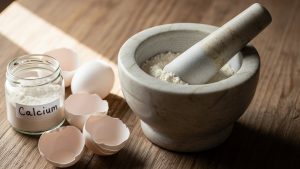
Since you aren’t feeding your dog whole bones (cooked bones splinter and kill dogs), you must add calcium artificially. The cheapest and most effective way? Eggshells.
How to make Eggshell Powder:
-
Save your eggshells from breakfast.
-
Wash them and bake them at 300°F for 10 minutes to dry/sanitize.
-
Grind them into a fine powder using a coffee grinder.
-
Dosage: Generally, 1/2 teaspoon of powder provides about 1000mg of calcium, which balances about 1 pound of meat. (Again, verify this specific dosage with your vet based on your dog’s weight).
This simple powder bridges the nutritional gap and prevents the bone issues mentioned earlier.
4. The “Toxic List”: What Never to Add
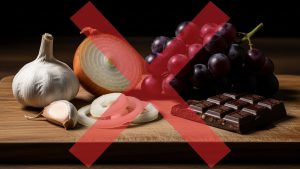
When cooking, you might be tempted to “flavor” the food like you would your own dinner. Stop. Foods that are healthy for humans can be fatal for dogs.
-
Onions & Garlic: They destroy canine red blood cells, leading to anemia. Never use onion powder.
-
Grapes & Raisins: Can cause sudden kidney failure.
-
Macadamia Nuts: Cause muscle tremors and paralysis.
-
Xylitol: An artificial sweetener found in peanut butter. It causes massive insulin spikes and liver failure. Always read the peanut butter label.
5. Supplements: The “Multivitamin” Insurance
Even with the perfect ratio of meat and veggies, you might miss micronutrients like Zinc, Copper, or Vitamin D. Commercial kibble is sprayed with a synthetic vitamin pack to ensure it is “complete and balanced.” When cooking at home, you need to replicate this.
-
Fish Oil: For Omega-3 fatty acids (coat and joint health).
-
Kelp Powder: For Iodine (thyroid health).
-
Cod Liver Oil: For Vitamin D and A.
I highly recommend buying a pre-made “Meal Balancer” supplement powder (like Balance IT) recommended by veterinary nutritionists. You just sprinkle it on the homemade food to fill in the gaps.
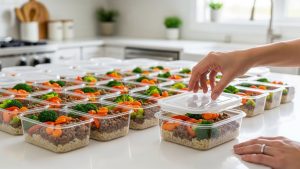
6. The Batch Cooking Strategy: Meal Prep
Cooking for your dog every night is unsustainable. You will get tired, and you will order pizza, and then your dog has nothing to eat. The solution is Batch Cooking.
I cook for my dog once every two weeks.
-
I use a giant stockpot or slow cooker.
-
I cook 10 lbs of turkey and veggies at once.
-
I portion it into Tupperware containers.
-
I freeze 10 days’ worth and keep 4 days’ worth in the fridge.
This ensures that “convenience” is never an excuse to switch back to low-quality kibble.
Frequently Asked Questions (FAQs)
Q: Is homemade food more expensive than kibble? A: Generally, yes. It costs more than budget kibble but is often comparable in price to high-end “premium” canned food. You are paying for human-grade ingredients.
Q: Can I just feed leftovers? A: No. Human leftovers often contain butter, salt, onions, and spices that are bad for dogs. Dog food should be bland and specifically prepared.
Q: How much should I feed my dog? A: This is tricky. Calorie density varies by recipe. You must calculate your dog’s daily caloric needs (RER) and weigh the food. A kitchen scale is mandatory. Start with 2-3% of their body weight and adjust based on whether they gain or lose weight.
Q: Does this fix allergies? A: Often, yes. Many dogs are allergic to the fillers/preservatives in kibble, not the chicken itself. Switching to a limited-ingredient homemade diet can clear up itchy skin and ear infections.
Conclusion
Embarking on the journey of using a homemade dog food guide is a labor of love. It requires math, time, and freezer space. But the results are undeniable. You will see it in their brighter eyes, their softer coat, and their boundless energy. You are giving them the gift of real food, free from mystery ingredients. Just remember: Balance is everything. Do the math, add the calcium, and watch your best friend thrive.