How to Pack Light for Travel: The Art of the “One-Bag” Lifestyle
Introduction
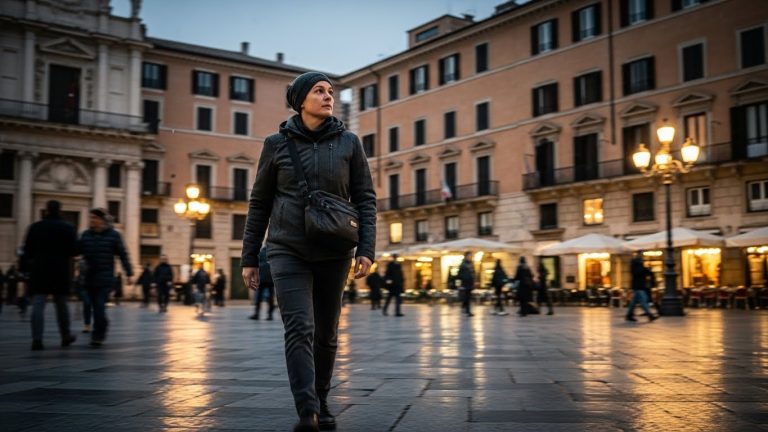
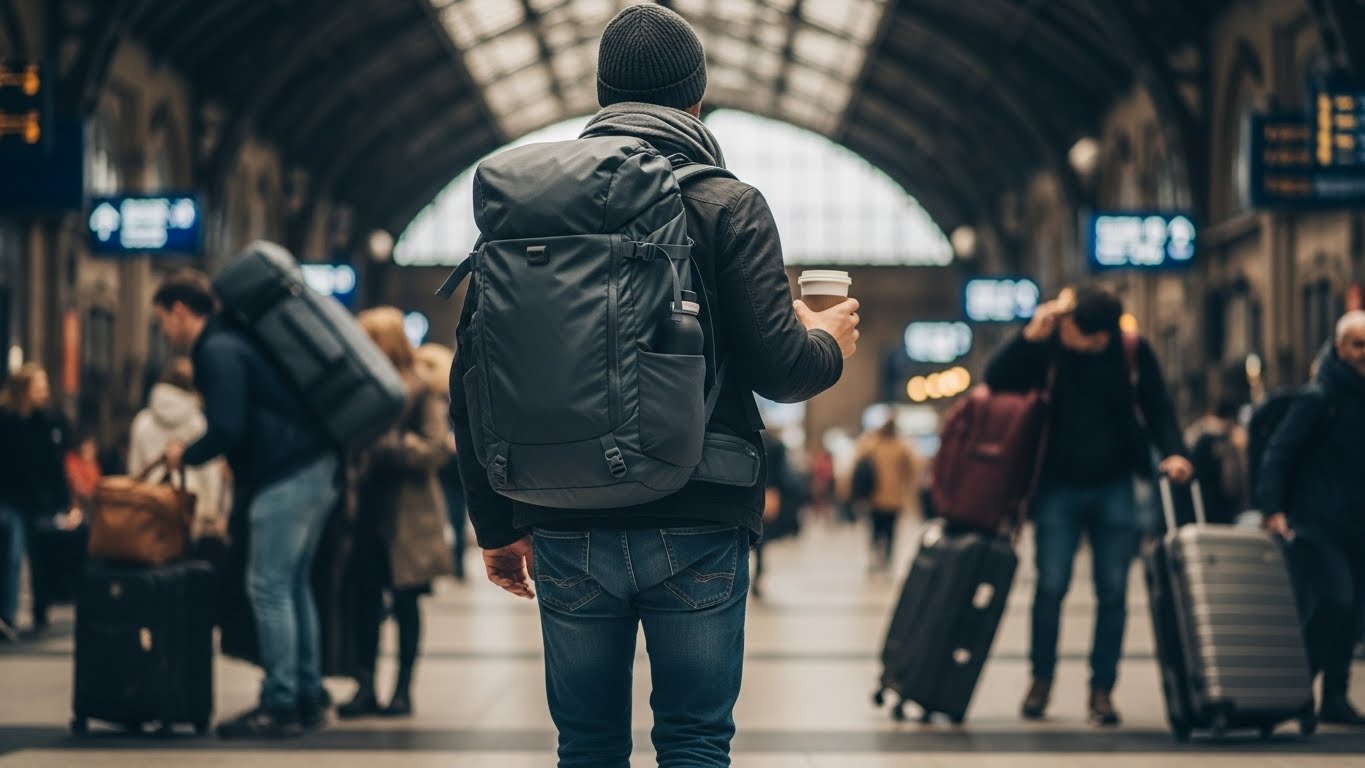
Learning how to pack light for travel is not just about avoiding baggage fees; it is about reclaiming your freedom. I learned this lesson the hard way on a rainy cobblestone street in Rome. I was dragging a massive 50-pound rolling suitcase with a broken wheel, sweating through my shirt, while trying to navigate a map on my phone. Meanwhile, a fellow traveler breezed past me with nothing but a sleek 40L backpack, sipping an espresso, looking completely unbothered.
In that moment, I realized that the things we own end up owning us. Overpacking is a symptom of fear—the fear of “what if.” What if it rains? What if I get invited to a gala? What if I spill coffee on my shirt? But the truth is, carrying a heavy burden physically drains you mentally. By mastering the art of one-bag travel, you can skip the check-in lines, never lose your luggage again, and move through the world with agility.
In this comprehensive 1200-word deep dive, I will teach you the science of fabrics, the geometry of packing cubes, and the psychological shift required to master how to pack light for travel for any trip, whether it is a weekend getaway or a month-long expedition.
1. The Philosophy: Carry-On Only is a Superpower
Why limit yourself to 7kg or 10kg? Because mobility is luxury. When you check a bag, you are tethered to the airport ecosystem. You have to arrive 3 hours early. You have to wait 45 minutes at the carousel. You risk the airline losing your belongings (a statistic that is rising every year according to the Bureau of Transportation Statistics).
Traveling with one bag means you land, you walk out of the airport, and you start your vacation immediately. It means you can hop on a train, jump in a tuk-tuk, or walk up five flights of stairs to your Airbnb without risking a back injury. It forces you to prioritize what actually adds value to your trip.
2. The Gear: Backpack vs. Roller
The first step in learning how to pack light for travel is choosing the right vessel. If you buy a massive suitcase, you will fill it. Parkinson’s Law applies to luggage: “Contents expand to fill the space available.”
The Sweet Spot: 35L to 40L This size is universally accepted as a “Carry-On” by almost every airline, including strict budget carriers like Ryanair or AirAsia.
-
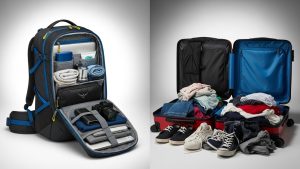
The Backpack: Best for agility (cobblestones, stairs, hiking). Look for a “clamshell opening” (opens like a suitcase) rather than a top-loader (like a hiking sack) so you can see all your gear at once. Brands like Osprey or Cotopaxi are industry standards.
-
The Roller: Best for business trips or smooth urban environments. It saves your back but limits your movement on rough terrain.
3. The Fabric Science: Why Cotton is the Enemy
If you pack five cotton t-shirts, your bag will be heavy, bulky, and smelly. Cotton absorbs moisture (sweat) and holds onto bacteria, which creates odor. The secret weapon of minimalists is Merino Wool.
Merino wool is a natural fiber from sheep that is antimicrobial.
-
The Science: The chemical structure of the wool fiber traps bacteria and prevents it from replicating. This means you can wear a Merino wool t-shirt for 3-5 days in a row without it smelling.
-
The Result: Instead of packing 7 shirts for a 7-day trip, you pack 2 Merino shirts. You just cut your clothing bulk by 70%.
Synthetic blends (like polyester) are good for quick drying, but they tend to smell bad very quickly. Stick to Merino or high-quality technical fabrics.
4. The Capsule Wardrobe: The “Rule of Three”
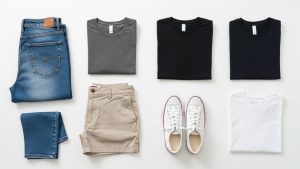
You don’t need an outfit for every day; you need clothes that work together. This is called a Capsule Wardrobe. Every top must match every bottom. Stick to a neutral color palette (black, grey, navy, tan) with maybe one “pop” color.
The 5-4-3-2-1 Rule:
-
5 sets of socks/underwear.
-
4 Tops (T-shirts/shirts).
-
3 Bottoms (1 pants, 1 shorts, 1 skirt/dress).
-
2 Shoes (1 walking, 1 sandal/dress shoe).
-
1 Hat/Accessory.
Layering is Key: Instead of bringing a heavy winter coat “just in case,” bring layers. A t-shirt + a fleece sweater + a lightweight rain shell = a winter coat, but versatile enough to be worn separately.
5. The Tetris Game: Packing Cubes and Rolling
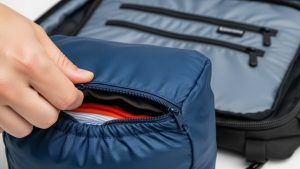
If you throw your clothes into a bag, they take up air and space. You need to compress them. Packing Cubes are non-negotiable. They act like drawers for your suitcase.
-
Compression Cubes: These have a second zipper that squishes the clothes down, removing excess air.
-
The Rolling Method: Rolling your clothes (military style) prevents wrinkles and saves more space than folding.
I organize my cubes by category:
-
Cube 1: Tops and Bottoms.
-
Cube 2: Socks and Underwear.
-
Cube 3: Tech (chargers, cables). When I arrive at the hotel, I just take the cubes out. I don’t have to unpack; my “drawers” are already organized.
6. Toiletries: The Solid Revolution
Liquids are heavy, and TSA hates them. The 3-1-1 rule (100ml limit) is a pain. The solution is to switch to Solids.
-
Solid Shampoo/Conditioner: As discussed in our Eco Living guide, these save massive space.
-
Toothpaste Tabs: Instead of a tube, bring dry tabs.
-
Solid Deodorant: Stick to sticks, not aerosols.
By removing water from your toiletries, your “dopp kit” becomes tiny, lightweight, and TSA-compliant. You never have to worry about a shampoo explosion ruining your clothes again.
7. Laundry on the Road: The Sink Wash
The mental hurdle to one-bag travel is: “But I’ll run out of clean clothes!” Not if you do laundry. I bring a small 100ml bottle of Dr. Bronner’s soap (which works for body, hair, and laundry). Every 3-4 days, I do a “sink wash.”
-
Plug the sink.
-
Add soap and warm water.
-
Agitate the clothes (socks/underwear/tees) for 2 minutes.
-
Rinse and wring out.
-
The Towel Trick: Lay the wet clothes on a dry towel, roll the towel up like a burrito, and stomp on it. This removes 80% of the water. Hang dry overnight.
Because you packed quick-dry fabrics (Merino or synthetic), they will be dry by morning.

Frequently Asked Questions (FAQs)
Q: What about shoes? They are huge. A: Wear your heaviest/bulkiest shoes on the plane (usually your sneakers or boots). Pack your lightweight shoes (flip flops or flats) in the bag. Never pack more than 2 pairs total.
Q: Can I bring a laptop? A: Yes, most 40L travel backpacks have a dedicated padded laptop sleeve against the back panel. This keeps the weight close to your spine, which is better for ergonomics.
Q: What if I want to buy souvenirs? A: Pack a “packable tote bag” or a duffel that folds down to the size of a tennis ball. If you buy too much, expand that bag and check it on the way home.
Q: Does this work for winter travel? A: Yes, but you wear your coat. You don’t pack it. Wear your thermal layers, sweater, and puffy coat onto the plane. Once on board, use the coat as a pillow.
Conclusion
Mastering how to pack light for travel is a journey of letting go. It is about letting go of the insecurity that you aren’t prepared. It is about trusting that you can figure things out on the road. When you travel light, you focus less on your stuff and more on the experience. You become a traveler, not a tourist. So zip up that carry-on, skip the baggage claim, and step out into the world with your hands—and your mind—completely free.