Intermittent Fasting 16/8: The Ultimate Beginner’s Guide to Autophagy and Fat Loss
Introduction
Trying Intermittent Fasting 16/8 for the first time feels like breaking a sacred law of existence. We have been told since kindergarten that “breakfast is the most important meal of the day.” We are terrified of the idea of hunger. I used to be the person who kept granola bars in my car, my desk, and my backpack because I was convinced that if I didn’t eat every three hours, my metabolism would crash and I would faint.
But three years ago, feeling sluggish and constantly bloated, I decided to try skipping breakfast. I pushed my first meal to 12:00 PM. I expected to be miserable. Instead, I felt a strange surge of mental clarity. The brain fog lifted. The mid-afternoon energy crash disappeared. And without counting a single calorie, my jeans started fitting looser.
In this comprehensive 1200-word deep dive, I will explain the Nobel Prize-winning science of Autophagy, why snacking is keeping your insulin spiked, and how to execute the Intermittent Fasting 16/8 protocol without feeling like you are starving yourself.
1. The Science: It’s Not About Calories, It’s About Hormones
Most diets fail because they focus solely on what you eat. Intermittent Fasting (IF) focuses on when you eat. To understand why this works, you need to understand Insulin.
Think of Insulin as a storage hormone. When you eat, insulin rises to store the energy (sugar) in your cells. When insulin is high, your body is in “Storage Mode.” It is physically impossible to burn body fat when insulin is high. In our modern life, we eat from 7 AM to 10 PM. We never let insulin drop. We are constantly in storage mode.
When you fast for 16 hours, your insulin levels flatline. This flips a metabolic switch. Your body says, “No food coming in? Okay, let’s raid the freezer.” That “freezer” is your body fat. According to Dr. Jason Fung, a leading expert on nephrology and fasting, this period of low insulin is essential for accessing fat stores that are otherwise locked away.
2. The Magic of Autophagy: Cleaning House
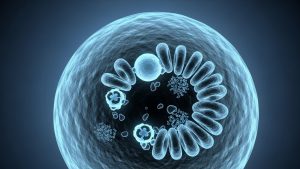
This is the coolest part of fasting, and it has nothing to do with weight loss. It is about longevity. When you stop eating for a prolonged period (usually around the 14-16 hour mark), your body enters a state called Autophagy.
Derived from Greek, it means “Self-Eating.” This sounds scary, but it is brilliant. Your cells start looking around for “junk”—damaged proteins, old organelles, and dysfunctional parts—and recycle them for energy. It is like a deep cleaning crew for your body. In 2016, Yoshinori Ohsumi won the Nobel Prize in Physiology or Medicine for discovering the mechanisms of autophagy. By eating all the time, we never give our bodies the downtime needed to perform this crucial cellular repair.
3. The Protocol: How to Do 16/8 Correctly
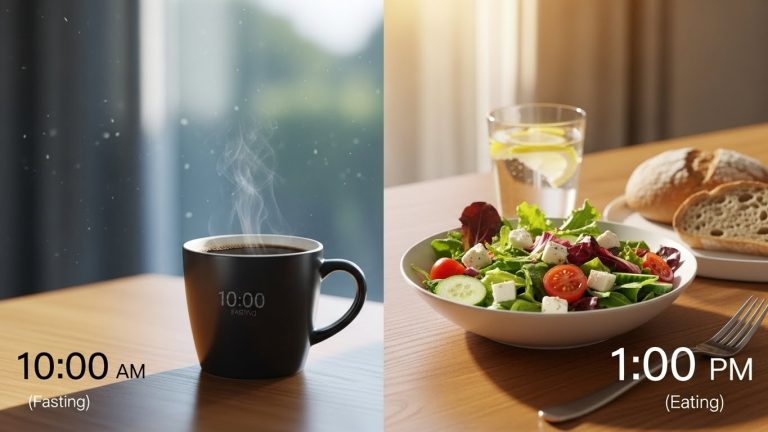
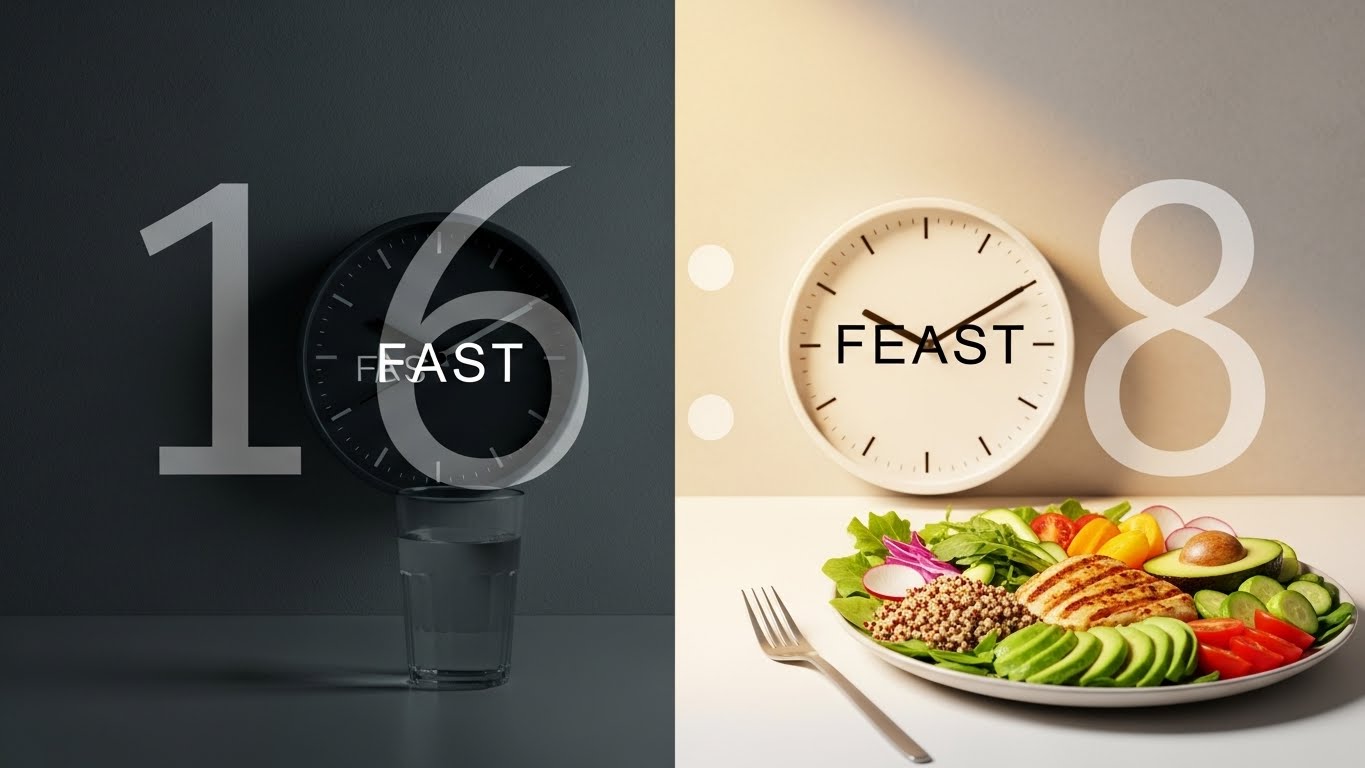
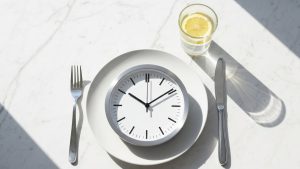
The Intermittent Fasting 16/8 method involves fasting for 16 hours and eating all your meals within an 8-hour window. This is the most popular method because you spend half of the fasting time sleeping.
Sample Schedule (The “Skip Breakfast” Model):
-
8:00 PM: Finish dinner. Start Fasting.
-
7:00 AM: Wake up. Drink water or black coffee. No food.
-
12:00 PM: Break Fast (Lunch).
-
8:00 PM: Last bite of Dinner. Close the window.
Sample Schedule (The “Skip Dinner” Model):
-
4:00 PM: Finish early dinner. Start Fasting.
-
8:00 AM: Break Fast (Breakfast).
Most people prefer skipping breakfast because it is socially easier to eat dinner with family or friends. The key is consistency. You are training your hunger hormones (Ghrelin) to adapt to a new rhythm.
4. What Breaks a Fast? (The “Dirty Fasting” Trap)
This is where beginners fail. They think, “A little splash of milk in my coffee won’t hurt.” Wrong. Technically, anything that triggers an insulin response breaks the fast.
The “Safe” List (Does Not Break Fast):
-
Water: Flat or sparkling (no sugar).
-
Black Coffee: No sugar, no milk, no creamer.
-
Tea: Green tea, black tea, herbal tea (unrestricted).
-
Apple Cider Vinegar: A tablespoon in water is generally fine.
The “Danger” List (Breaks Fast):
-
Creamer/Milk: Even a splash contains lactose (sugar) or protein, which spikes insulin.
-
Artificial Sweeteners: Some studies suggest sweeteners like Aspartame can trigger an insulin response even without calories.
-
Bone Broth: Contains protein. Save it for your eating window.
If your goal is strict gut rest and autophagy, stick to water and black coffee. If your goal is just weight loss, a tiny splash of cream (called “Dirty Fasting”) might be okay, but it is not optimal.

5. Managing Hunger: The “Ghrelin Wave”
You will get hungry. That is a fact. But hunger is not a linear line that goes up until you explode. It is a wave. Hunger is driven by a hormone called Ghrelin. It spikes at your usual meal times.
If you usually eat at 8 AM, your ghrelin will spike at 8 AM. You will feel your stomach growl. The Hack: Drink a large glass of water or a cup of black coffee and wait 20 minutes. The wave will pass. Ghrelin drops back down, and you will forget you were hungry. After about 3-4 days of Intermittent Fasting 16/8, your ghrelin will learn the new schedule and stop spiking at 8 AM.
6. What to Eat: Don’t Treat It Like a Cheat Day
Fasting is not a magic pass to eat junk food. If you fast for 16 hours and then eat 3,000 calories of pizza and donuts in your 8-hour window, you will gain weight. The quality of food matters.
Focus on:
-
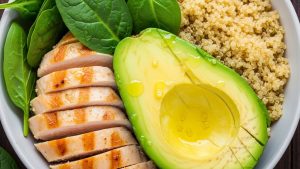
Protein: Break your fast with protein (eggs, chicken, yogurt). It keeps you full longer.
-
Fiber: Vegetables are crucial to keep your gut microbiome happy.
-
Healthy Fats: Avocado, nuts, olive oil.
Avoid breaking your fast with pure sugar (like a donut). Your insulin sensitivity is high after a fast, and sugar will hit your bloodstream like a freight train, causing a massive crash an hour later.
7. Who Should NOT Fast?
While beneficial for many, fasting is not for everyone.
-
Pregnant or Breastfeeding Women: You need consistent nutrients for the baby.
-
History of Eating Disorders: Fasting can trigger obsessive behaviors in people with Anorexia or Bulimia.
-
Underweight Individuals: If your BMI is too low, you don’t have the fat stores to support fasting.
-
Type 1 Diabetics: Requires strict medical supervision due to insulin medication.
Always consult your doctor before making drastic changes to your diet.
Frequently Asked Questions (FAQs)
Q: Will I lose muscle? A: Generally, no. During fasting, Human Growth Hormone (HGH) increases significantly, which helps preserve muscle mass. As long as you eat enough protein during your window and use your muscles (exercise), you won’t burn muscle.
Q: Can I work out while fasting? A: Yes! Working out in a fasted state can actually accelerate fat burning because your glycogen stores are low. Just listen to your body. If you feel dizzy, stop.
Q: Does sleeping count towards the 16 hours? A: Yes! That is the best part. If you sleep for 8 hours, you are already halfway there.
Q: Can women do 16/8? A: Yes, but women’s bodies are more sensitive to hormonal stress. Some experts recommend women start with a 14/10 window (14 hours fast) to see how their cycle responds before moving to 16/8.
Conclusion
Adopting Intermittent Fasting 16/8 is one of the most powerful tools for taking control of your health. It is free, simple, and flexible. It teaches you the difference between boredom and true hunger. It gives your body a break from the constant work of digestion, allowing it to heal and repair. Start with a 12-hour fast, push it to 14, and then 16. You might find that skipping breakfast is the secret ingredient you have been missing all along.