How to Cure Dog Separation Anxiety: Stop the Barking and Destruction
Introduction
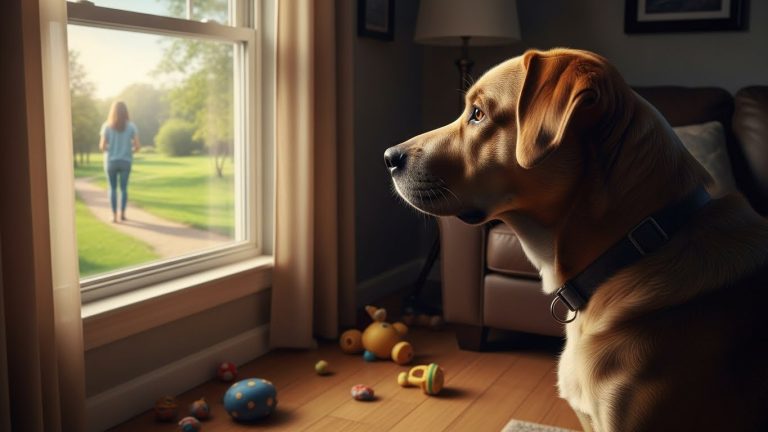
Learning how to cure dog separation anxiety is often the hardest challenge a pet owner will ever face, testing your patience and your love for your furry friend. I will never forget the day I came home from a short grocery trip to find my living room covered in white “snow.” Upon closer inspection, the snow was actually the stuffing from my brand-new $800 sofa. Sitting in the middle of the destruction was Buster, my Golden Retriever mix, looking guilty and terrified.
I wasn’t angry; I was heartbroken. Buster wasn’t being “bad.” He was having a panic attack. Separation anxiety isn’t about a dog being spiteful; it is a primal fear of abandonment. Since the pandemic, millions of “pandemic puppies” who grew up with their owners constantly at home are now struggling to cope with being alone.
In this comprehensive 1200-word deep dive, I will share the exact behavior modification protocols I used to help Buster become independent. We will cover the science of “departure cues,” why getting a second dog usually doesn’t work, and the step-by-step guide to cure dog separation anxiety for good.
1. Identifying the Signs: Is It Anxiety or Boredom?
Before we fix the problem, we must diagnose it. Not every destructive dog has anxiety. Some are just bored teenagers with too much energy. According to the ASPCA, true separation anxiety happens only when the dog is left alone or separated from a specific person.
Key Symptoms:
-
Destruction: Digging at doors, chewing window sills, or destroying furniture specifically near exit points.
-
Vocalization: Howling or barking relentlessly for hours (not just a few minutes of protest).
-
Escaping: Extreme attempts to break out of crates or rooms, often resulting in injury (broken teeth, bleeding paws).
-
Accidents: Urinating or defecating inside, even if they are fully house-trained.
If your dog destroys the trash can while you are in the other room, that is boredom. If your dog claws through the drywall only when you leave the house, that is separation anxiety.

2. Desensitization: Breaking the “Departure Cues”
Dogs are pattern-seeking missiles. They know you are leaving before you even open the door. They watch for your “Departure Cues”:
-
Putting on shoes.
-
Picking up keys.
-
Grabbing your coat.
The moment you touch your keys, your dog’s anxiety spikes to Level 10. To fix this, you need to make these cues meaningless.
The Drill:
-
Pick up your keys. Then sit down and watch TV. Do not leave.
-
Put on your shoes. Then walk to the kitchen and make coffee. Take them off.
-
Put on your coat. Then fold laundry.
Do this 10-20 times a day. Eventually, your dog will stop reacting to the keys because they no longer predict you leaving. This technique, known as systematic desensitization, is widely recommended by behaviorists at the American Kennel Club (AKC). It is tedious, but it breaks the panic loop.

3. The “Stay” Command: Building Independence
Anxious dogs are often “Velcro dogs.” They follow you to the bathroom, the kitchen, and the mailbox. They have zero independence. To help them, you must teach them that being physically apart from you is safe.
The “Invisible Wall” Game: Start training a solid “Stay” command on their bed or a specific mat.
-
Ask for a “Down-Stay.”
-
Take one step away. Click/Mark and treat.
-
Take two steps away. Treat.
-
Walk into the next room for 1 second. Return and treat.
Gradually increase the time. If they break the stay, you went too fast. The goal is to be able to go to the bathroom with the door closed while your dog waits calmly in the living room. This builds the emotional muscle of “I can be alone.”
4. Exercise: A Tired Dog is a Calm Dog
You cannot train anxiety out of a dog that is bursting with energy. If your dog has been sleeping all night and you leave for work at 8 AM without exercising them, you are setting them up for failure. Their tank is full of energy, and that energy will turn into anxiety.
The Routine: Before you leave the house for a long period, you must drain their battery.
-
Physical: A 30-minute sniff walk (letting them sniff decompresses the brain) or a game of intense fetch.
-
Mental: Use a puzzle toy. Licking and chewing are natural soothers for dogs. Give them a frozen Kong stuffed with peanut butter right before you leave. This creates a positive association: “Human leaves = I get a delicious treat.”

5. Crate Training: Sanctuary or Prison?
For some dogs, a crate is a safe haven (like a den). For others, it is a panic box. If your dog hurts themselves trying to escape the crate, stop using it immediately. You need to find a “dog-proof” room instead, like a laundry room or a gated kitchen area.
However, if your dog accepts the crate, make it the best place on earth. Never use it for punishment. Cover it with a blanket to make it dark and cozy. Play calming classical music or reggae (studies show dogs like reggae!). According to PetMD, the crate should be associated with high-value rewards, not isolation.

6. The “Cool” Departure and Return
We humans are emotional. When we leave, we say, “Oh my poor baby, Mommy will miss you, be a good boy!” in a high-pitched, sad voice. When we return, we throw a party: “I’m home! I missed you!”
Stop doing this. You are validating their anxiety. You are telling them, “Leaving is a big deal.”
-
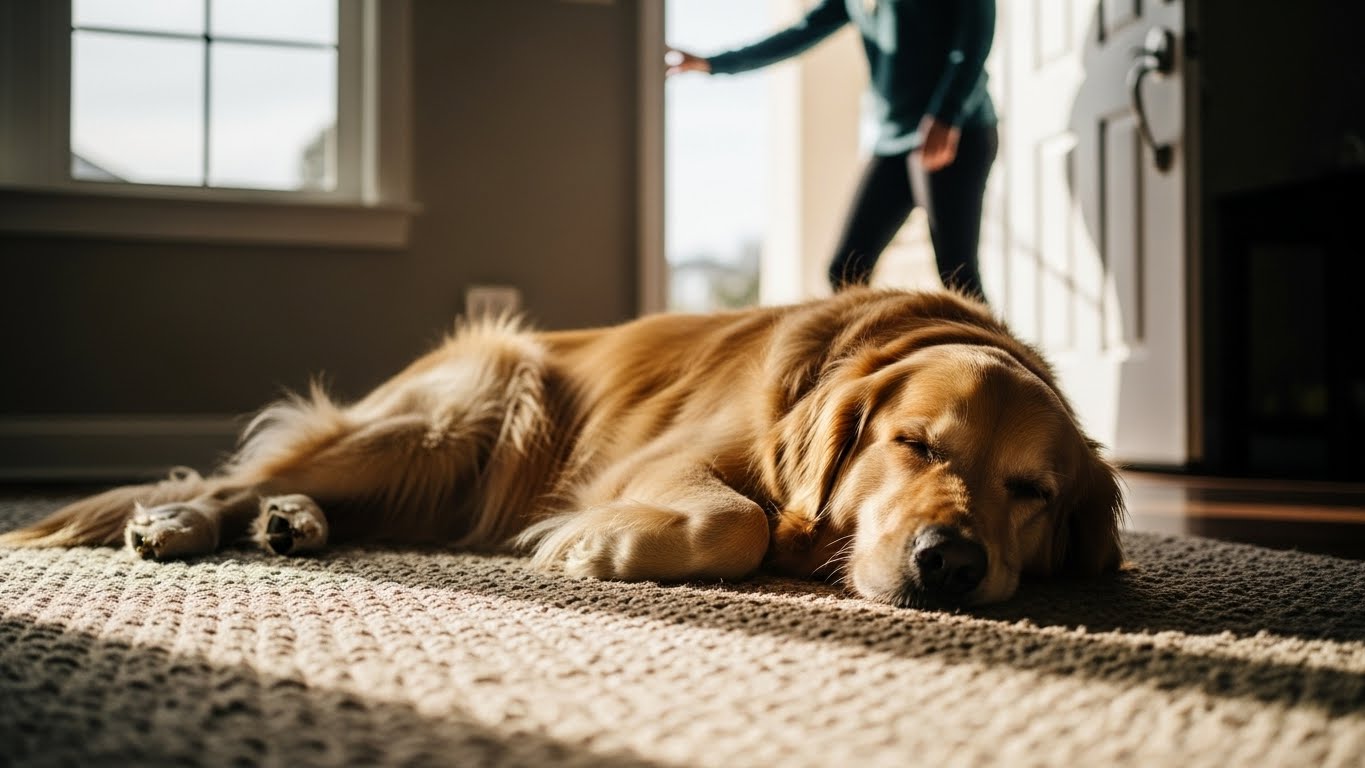
When you leave: Be a ghost. Just walk out. No eye contact, no talking.
-
When you return: Ignore your dog. I know it’s hard. But if they are jumping and crying, turn your back. Wait until they are calm and have four paws on the floor. Then, calmly pet them.
This teaches them that your coming and going is a boring, non-event.
Frequently Asked Questions (FAQs)
Q: Should I get a second dog to keep them company? A: Usually, no. Separation anxiety is about you, the human. If you get a second dog, you will likely just have two anxious dogs. The anxious dog needs you, not another playmate.
Q: Can medication help? A: Yes. For severe cases where the dog is injuring themselves, you should consult a vet. Anti-anxiety medication (like fluoxetine) can lower their panic threshold enough so that training can actually work. It is not a cure, but a tool.
Q: How long does it take to fix? A: It depends. Mild cases can be resolved in weeks. Severe cases can take months or even a year. It requires infinite patience. Regression is normal.
Q: What about CBD oil? A: Anecdotally, many owners find it helps with mild stress, but there is limited scientific data compared to prescription meds. Consult your vet before adding supplements.
Conclusion
To cure dog separation anxiety is to rebuild your dog’s confidence from the ground up. It requires you to change your routine, your energy, and your expectations. There will be good days and bad days (and maybe another chewed pillow). But when you finally close the door and hear silence instead of barking, you will know that you have given your dog the greatest gift of all: the ability to feel safe in their own skin.